
micro-credential
Change Management
Do you want to play an active role in shaping change within organizations? This Micro Credential shows you how to make change happen, whether it’s driven by digital transformation or by managing increasingly diverse teams. Learn how to manage change processes while taking people, structure, and technology into account. Gain practical, concise training—flexibly, alongside your career and personal life.
Find continuing education
From MBAs and courses to certifications.
Effectively Managing Change—in Digital, Organizational, and Personal Contexts
TheChange Managementmicro-credential provides practical skills for strategically planning, actively supporting, and thoughtfully implementing change processes in organizations. It focuses on current topics such as digital transformation, generative AI, diversity, modern work environments, and psychological adaptation processes.
This micro-credential in the field of “Business Administration and Economics” can be earned as part of an existing FERNFH degree program or as a standalone short program designed exclusively to lead to this qualification.
This micro-credential is offered as part of theBusiness Administration & Business Psychology | Bachelor's degree program.
Courses
- Digital Transformation & AI (2 ECTS, Summer Semester)
- Organizational Laboratory (2 ECTS, Summer Semester)
- Change Management & Process Support (3 ECTS, Winter Semester)
- Gender & Diversity Management (3 ECTS, Summer Semester)
- Psychology of New Work Environments (3 ECTS, Summer Semester)
It is recommended that students take the courses in this order.
Skill development
Upon successful completion, students will be able to …
- Understand and explain concepts of digital and AI transformation; identify areas of application, potential uses, and ethical risks; apply the fundamentals of prompt engineering; understand the skills needed to work with generative AI; and reflect on one’s own abilities in order to identify steps for personal development.
- reflect on their own actions within organizational processes, and recognize and evaluate organizational relationships. They are able to intervene effectively in complex decision-making situations and to develop and design management tools.
- To identify diversity-related phenomena in organizations, outline measures in human resources and organizational development, and critically evaluate existing measures.
- apply current change management methods and justify their approach to process consulting. They have background knowledge of change management, can independently design and oversee projects, structure change initiatives, identify potential interventions, and deepen their reflective skills regarding change-related topics.
- describe modern work models and trends, analyze the psychological implications of digital transformation, and distinguish between career paths and models of a subjectively fulfilling work life. In addition, they understand psychological adjustment processes associated with changes such as changing jobs, job loss, or transitioning to retirement, and can describe and contextualize support measures in economic contexts.
Duration of the program: 2semesters
Scope: 13 ECTS credits
Level: 6 – Undergraduate
Cost: €599 plus ÖH membership fee
Application deadline: Dec. 31, 2026
Start: April 23, 2027

Application deadlines
01. Jan. 1970


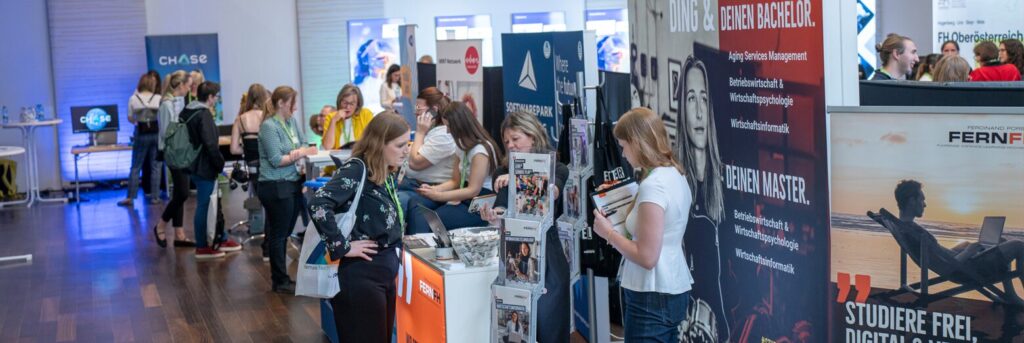


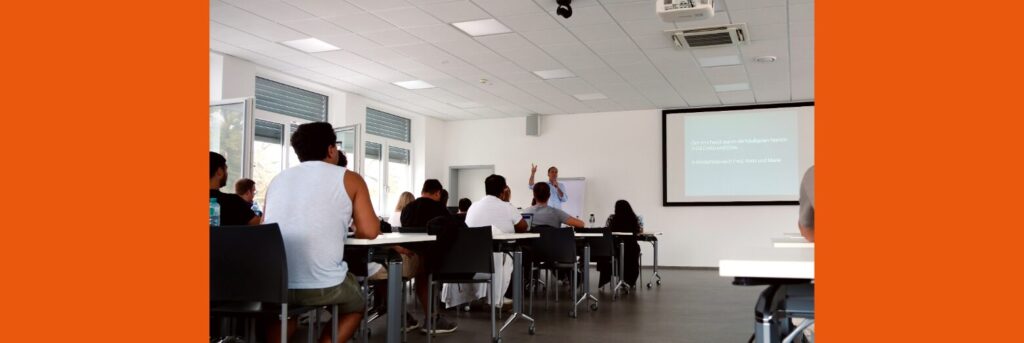

You can find the current dates for our online information sessions on the pages for each training program and in the event overview on our website.
Registration is generally not required. However, you will need an internet connection to participate online. Please always check the instructions for each event.
Legal Framework: The principles and many provisions governing the procedures for master’s degree programs are set forth in the University of Applied Sciences Study Act (FHStG); master’s degree programs are explicitly addressed only in a few sections of the FHStG. At FERNFH, however, the study and examination regulations for the programs stipulate that a large portion of the statutory provisions of the FHStG regarding Master’s degree programs also apply by analogy to the Master’s programs.
ECTS: The credit load for master’s programs at FERNFH is 120 ECTS; master’s programs may also comprise fewer ECTS, but no fewer than 90. The 120 ECTS of a master’s program must be completed in 4 semesters / 2 years. For Master’s programs, the distribution of credits may also differ; that is, they may span 3 or more semesters (with fewer than 30 ECTS per semester).
Admission Requirements: Admission to a master’s program requires the completion of a relevant first degree. For master’s programs that generally serve as a career-oriented, supplementary qualification, admission may also be granted under certain circumstances to applicants with a non-academic, post-secondary vocational qualification.
Degree: Both master's degree programs and master's courses lead to an academic master's degree.
Funding & Approval: Master’s programs are approved by the Federal Ministry of Science, Research, and Economy and accredited by the Agency for Quality Assurance and Accreditation Austria (AQ Austria). They are federally funded, meaning students are required to pay tuition fees of €363.36 (plus the ÖH contribution).
Master’s programs are established by FERNFH, and their content is reviewed and approved by the faculty. Program fees are fully financed by students enrolled in the Master’s program; program spots are not federally funded. However, as with the Master’s degree programs, scholarships and financial aid may be available in some cases.
Admission to a doctoral program: A master’s degree qualifies a student to begin a related doctoral program. This right does not apply to graduates of a master’s program. Whether a master’s degree qualifies a student for a doctoral program is determined at the discretion of the universities offering the doctoral program.
Quality Assurance: Once established, both master’s degree programs and master’s courses are subject to the same internal quality assurance processes at FERNFH. The corresponding quality management system is audited every seven years by an international quality assurance agency.
You can find the latest information on scholarships and grants for continuing education in the Scholarships and Grants section.
Continuing education at FERNFH consists of a few days of in-person classes and distance learning phases. Please refer to the respective website for the course or continuing education program for details on the exact structure.
The admissions process varies significantly from program to program. In all cases, the first step is to submit a personal online application.
Details on the individual admission procedures for the courses and programs…