Developing digital learning tools in collaboration with future users
Note: The article is written in German below
Ferdinand Porsche FERNFH: The PSYGESKOM research project demonstrates that co-creation is a key factor in the success of digital educational innovation.
Good digital learning tools are developed long before technology comes into play
How do higher education institutions develop digital learning tools that are science-based and, at the same time, genuinely meet the needs of their target groups? This question is becoming increasingly important in light of ongoing digitalization. Ultimately, digital learning tools are effective not only because of the technology, but also because of a development process that is consistently tailored to the learners’ needs.
The PSYGESKOM research project, conducted jointly by Ferdinand Porsche FERNFH and the Medical University of Vienna, takes a consistently user-centered approach to this end. The project aims to develop a digital serious game to promote mental health literacy among children and adolescents aged 10 to 14. However, the real innovation lies not only in the product itself, but also in the development process used.
Not just designed for the target audience—but co-created with them
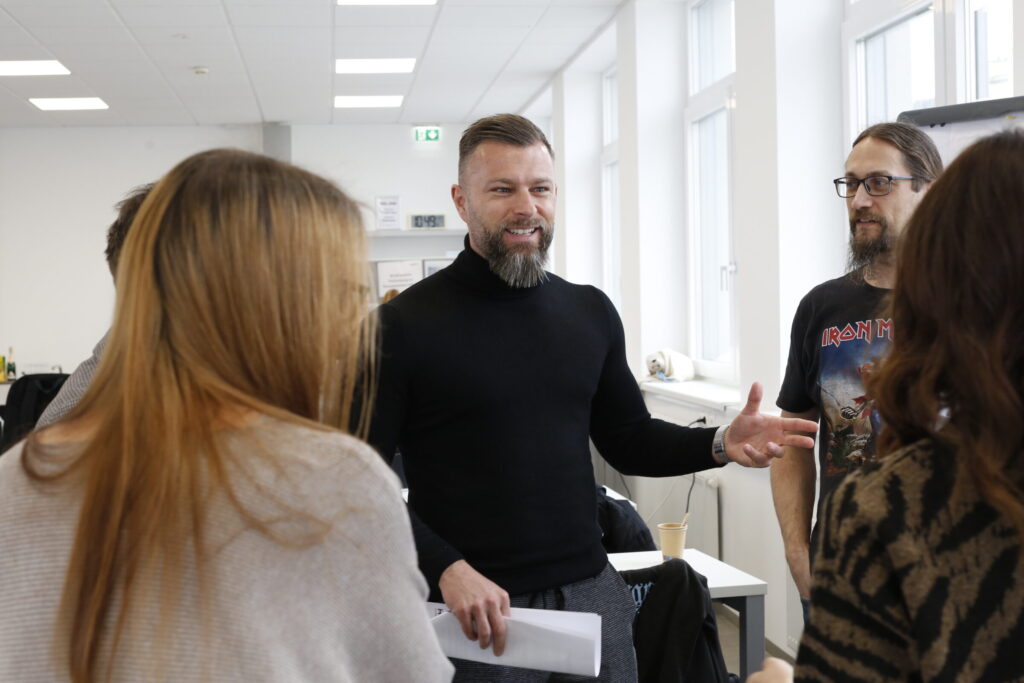
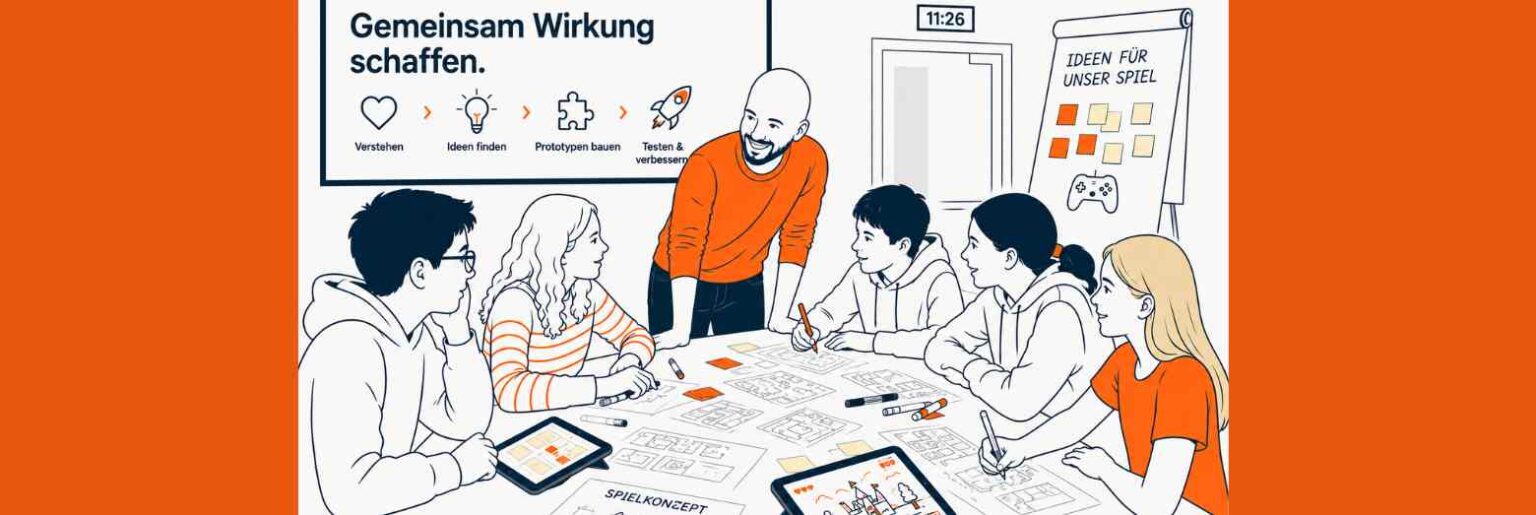
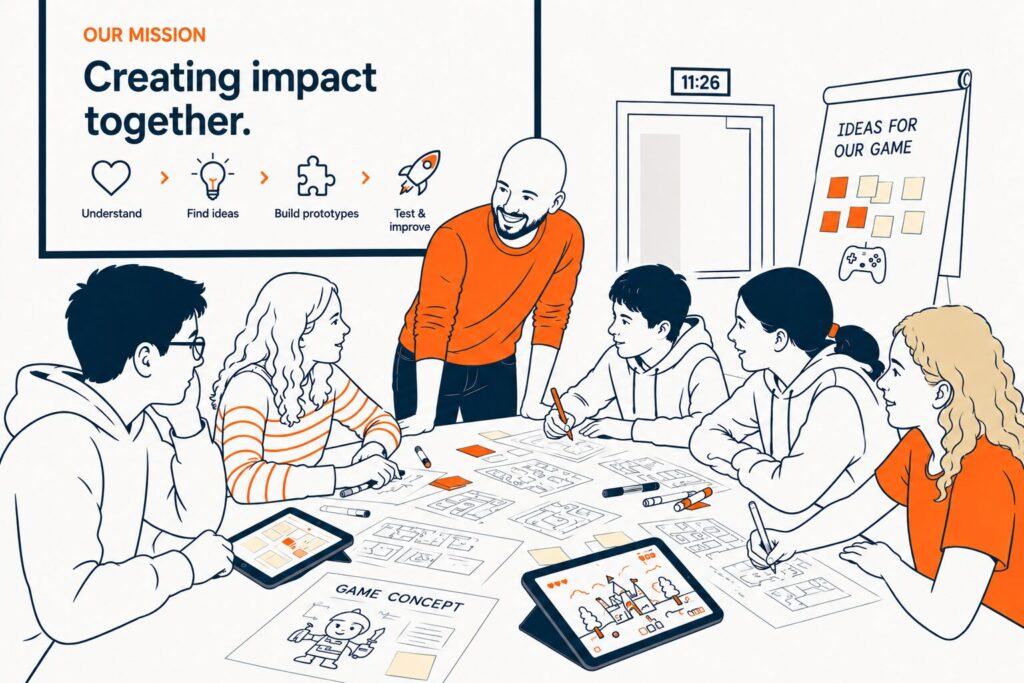
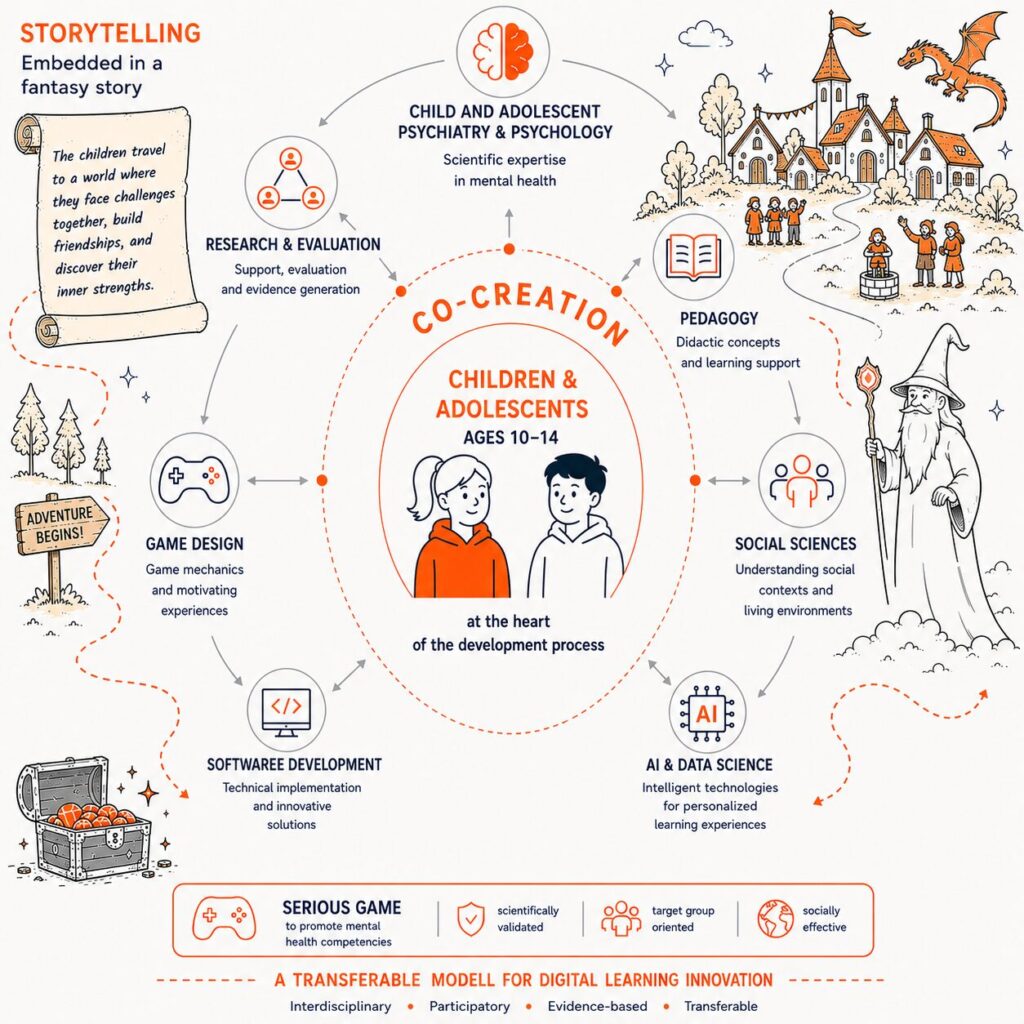
PSYGESKOM relies on a participatory co-creation process, rather than having the game developed exclusively by experts. Children and adolescents are actively involved in the development process from the very beginning and help shape the game as part of an interdisciplinary research team.
The team includes experts in psychology, child and adolescent psychiatry, social sciences, software and game development, artificial intelligence, and fantasy storytelling, as well as stakeholders from the school setting. These diverse perspectives are continuously incorporated into the development process and form the basis for a digital serious game that combines scientific evidence with the needs of its future users.
Co-creation as a guiding principle of innovation
This approach goes beyond traditional needs assessments or usability tests. The target group is not simply involved at the end of the development process, but actively contributes to shaping the learning tool from the very beginning.
The project thus follows the principles of human-centered design, participatory research, and evidence-based co-creation. Scientific expertise and practical experience complement one another to develop digital learning resources that are scientifically sound, motivating, and relevant to everyday life.
A Serious Game to Promote Young People's Mental Health
The serious game developed as part of the PSYGESKOM project is aimed at children and young people between the ages of 10 and 14. The goal is to improve their mental health literacy—that is, their ability to maintain good mental health, recognize mental health issues early on, develop healthy coping strategies, and seek support when needed.
In the game, the children take on the roles of magicians and help a village community overcome a mysterious darkness. Through play, they learn to recognize psychological stress, strengthen social networks, and work together to find solutions to challenging situations.
The serious game combines scientifically sound findings with the possibilities offered by game-based learning, providing an accessible approach to health education, a topic of great social relevance.
A model with potential for digital higher education
PSYGESKOM demonstrates that successful digital learning innovation begins long before the technical implementation. The key lies in a development process that combines scientific expertise with the experiences and needs of future users.
The project thus provides a transferable model for the development of digital learning resources in higher education. It illustrates how interdisciplinary collaboration, participatory research, and co-creation can help create learning formats that are scientifically sound, tailored to specific target groups, and (socially) effective.
Funding
PSYGESKOM is funded by the Vienna Science, Research, and Technology Fund (WWTF) and the state of Lower Austria (Project number: 10.47379/LS22030).


About FERNFH
FERNFH is Austria’s leading university of applied sciences for distance learning. As a public university of applied sciences, it has been consistently advancing academic distance learning for over 20 years, combining digital instruction with personalized support and academic excellence.
German Version
Developing Digital Learning Resources Together with Learners
Ferdinand Porsche FERNFH: How the PSYGESKOM research project demonstrates that co-creation can be a key factor in the success of digital educational innovation.
Good digital educational programs are developed long before technologycomes into play
How do universities develop digital learning offerings that are scientifically sound and, at the same time, truly meet the needs of their target audiences? This question is becoming increasingly important in light of the ongoing digitization of education. Ultimately, digital learning offerings are effective not only because of technology, but also because of a development process that is consistently tailored to the needs of learners.
The Research Project PSYGESKOM, conducted by the Institute of Health Sciences at Ferdinand Porsche FERNFH in collaboration with the Medical University of Vienna, takes a consistently user-centered approach to this end. The project is developing a digital serious game to promote mental health literacy among children and adolescents aged 10 to 14. However, the true innovation lies not only in the product itself, but also in the development process.
Not developed for the target audience—but together with them
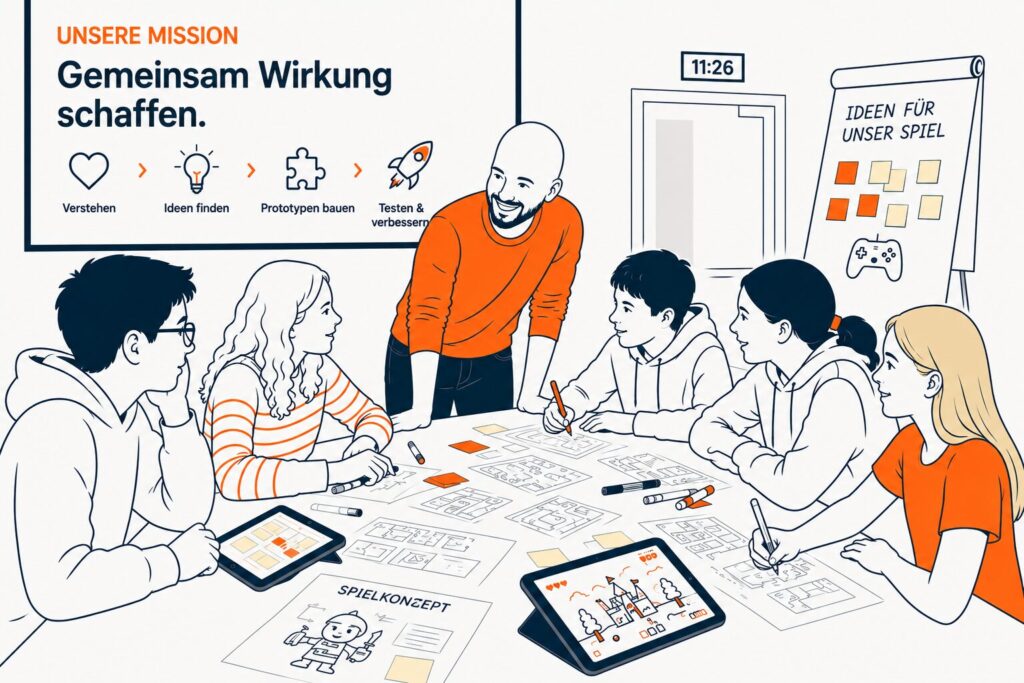
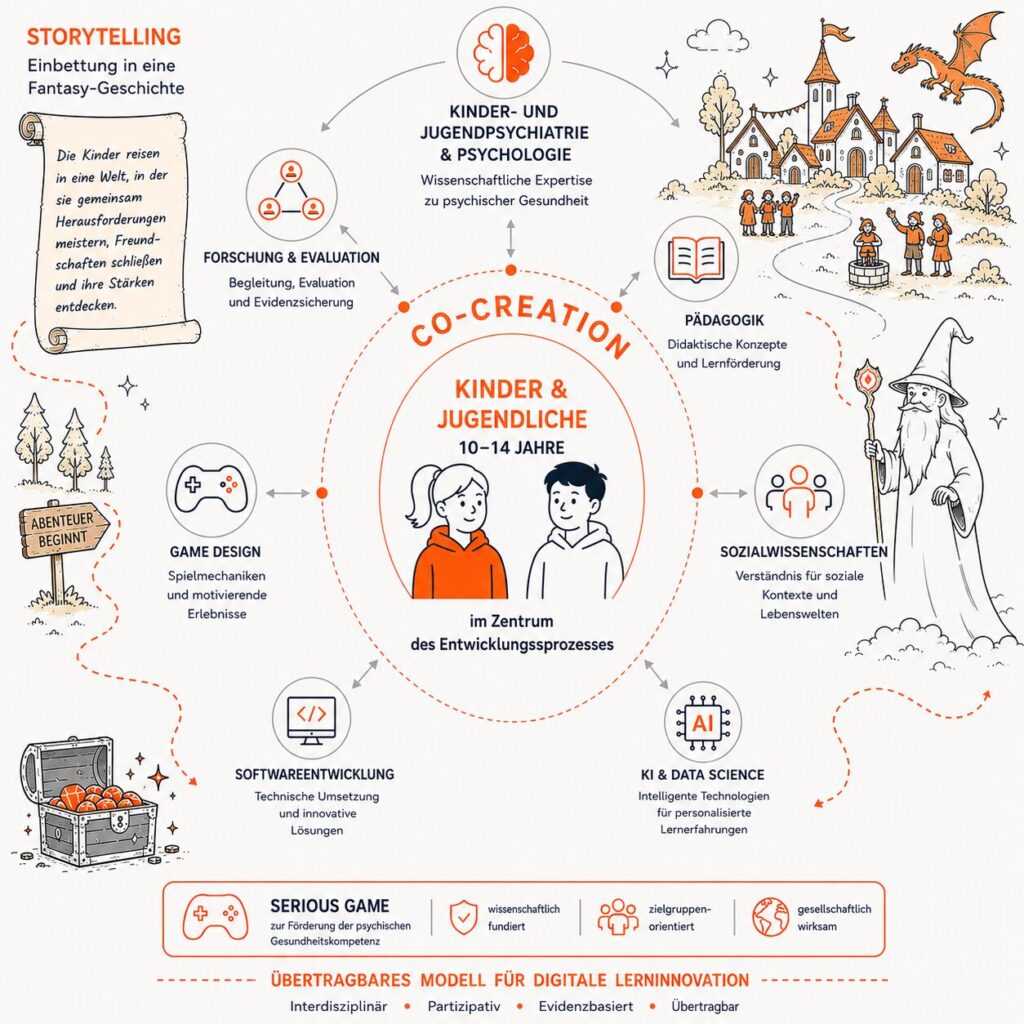
Instead of having the game developed exclusively by experts, PSYGESKOM relies on a participatory co-creation process. Children and adolescents are actively involved in the development from the very beginning and help design the game as part of an interdisciplinary research team.
The team includes teachers, psychologists, child and adolescent psychiatrists, social scientists, software developers, game designers, AI experts, and storytelling specialists. These diverse perspectives are continuously incorporated into the development process, laying the foundation for a learning program that combines scientific evidence with the needs of its future users.
Co-Creation as a Principle of Innovation
This approach goes beyond traditional user surveys or usability tests. The target audience is not simply involved at the end of the development process, but actively helps shape the learning experience from the very beginning. The project thus follows the principles of human-centered design, participatory research, and evidence-based co-creation. Academic expertise and practical experience complement each other to develop digital learning experiences that are academically sound, motivating, and relevant to everyday life.
A Serious Game for Young People's Mental Health
The serious game developed as part of the PSYGESKOM project is aimed at children and adolescents ages 10 to 14. The goal is to strengthen their mental health literacy—that is, their ability to promote their own mental health, recognize mental health challenges early on, develop healthy coping strategies, and seek support when needed.
In the game, children take on the roles of witches and wizards and help a village community overcome a mysterious darkness. Through play, they learn to recognize emotional stress, strengthen social networks, and work together to develop solutions for challenging situations.
The serious game combines scientifically grounded insights with the possibilities of game-based learning and provides low-threshold access to health education, a topic of great social relevance.
A Model with Potential for Digital Higher Education
PSYGESKOM demonstrates that successful digital learning innovation begins long before the technical implementation. The key is a development process that combines scientific expertise with the experiences and needs of future learners.
The project thus provides a transferable model for the development of digital educational offerings. It illustrates how interdisciplinary collaboration, participatory research, and co-creation can contribute to the creation of learning formats that are scientifically sound, tailored to specific target groups, and (socially) effective.
Financing
PSYGESKOM is funded by the Vienna Science, Research, and Technology Fund (WWTF) and the State of Lower Austria (project number: 10.47379/LS22030).
About FERNFH
FERNFH is Austria's leading university for distance learning. As a public university of applied sciences, it has been consistently advancing academic distance learning for over 20 years, combining digital instruction with personalized support and academic excellence.