
bachelor's degree
Business Informatics
Bridge the worlds of business and IT as a digital bridge-builder! With a bachelor’s degree in Business Informatics, you’ll become an expert in shaping a sustainable digital future. This program covers all the skills needed to make data-driven decisions and successfully guide companies through digital transformation.
Shaping the Digital Transformation
Whether it’s production processes, supply chains, financial markets, or human resources management, there is hardly any area of economic activity today that remains untouched by digitalization. Companies face the challenge of keeping pace with rapid technological change while acting in a financially sound manner. They need people who not only understand how technologies work, but also how to use them in a way that makes business sense.
Do you want to digitize processes, but in a technologically sustainable way?
In the Bachelor’s program in Business Informatics at FERNFH, that’s exactly what you’ll learn: You’ll gain digital and business expertise and combine both perspectives to act as a bridge between IT, management, and business development. Whether in large corporations, startups, or public organizations, you’ll identify opportunities for optimization, steer transformation processes, and drive innovation. Your degree program gives you the freedom to specialize according to your interests—whether in information and digitalization management, software development, or many other fields—so you can shape your own unique career path.
Duration of the program: 6 semesters / 3 years
Scope: 180 ECTS credits
Cost: €363.36 per semester plus ÖH membership fee
Requirements: General university entrance qualification or relevant professional qualification (including additional exams)
Professional internship: 12 calendar weeks of 25 hours each, or 300 working hours, in a field-related position
Application period begins: Sept. 8, 2025
Application deadline: July 12, 2026
Language: German

From understanding computer networks and computer programs to working with data, and on to the transformation of business processes and artificial intelligence

From traditional business administration topics, legal issues, and economic and social issues to the options for structuring a digital company.

Skills for successful entrepreneurship that foster a mindset that does not overlook the people we interact with.

Elective courses (45 ECTS) and individual courses (15 ECTS): These allow you to delve deeper into specific WINF subject areas or focus on individual topics of your choice.

Typical groups of people who study here

who are looking for a program that takes their professional and personal circumstances into account—not just in the promotional brochure.
who want to build a career at the intersection of IT and business.
who want to combine their business management knowledge with technical IT expertise.
who want to expand their skills and qualify for management positions in digital transformation projects.
who want to transition into the IT field and see their professional future in business informatics.
who want to develop digital solutions and help shape the digital transformation.



Your Career After College
Optimize IT costs and develop cost-effective IT strategies.
Analyze and organize company data to support strategic decision-making.
Use data to make informed business decisions.
I advise companies and organizations on digital transformation.
Develop strategies for digital business processes.
Manage innovative IT projects in companies.
Develop IT architectures for future-proof companies.
Curriculum
Core Curriculum (120 ECTS)
Business Informatics from the Ground Up – In the core curriculum, you’ll gain a solid foundation of knowledge in the fields of computer science, business, law, and digitalization.
Elective Course Curriculum (45 ECTS)
Personal Specialization – Choose from topics such as “The Digital Firm,” software engineering, applied computer science, information technologies, entrepreneurial mindset, economics and society, information systems management, and IT consulting, and tailor your academic focus accordingly.
Individual Curriculum (15 ECTS)
Elective courses allow you to gain additional in-depth knowledge in various subject areas that you need for your individual qualification profile, even beyond the scope of your degree program.
Business Administration
Type: Required course · Language of instruction: German · Academic year: 1 · Semester: 1
Skill development
- You are familiar with the basics of bookkeeping and financial reporting.
- You know the basic structure of a balance sheet and an income statement, and you can post simple receipts and invoices.
- You can prepare simple balance sheets and income statements for Austrian companies, including adjustments and subsequent entries.
- You'll learn about the Austrian Standard Chart of Accounts and its account classes.
- You can read a balance sheet and derive business relationships and key figures from it.
- You'll also gain insight into the cash flow statement.
Course Content
- Fundamentals of Accounting
- Posting to Accounts (Account Assignment)
- Financial Statement
- Financial Accounting
- Basic Principles of Accounting Policy
- Preparation of Annual Financial Statements
Exam Format
Type: Required course · Language of instruction: German · Academic year: 1 · Semester: 1
Skill development
- Identify criteria for successful business management and the conflicting goals associated with them.
- Understanding the business functions and the stakeholders involved.
- Use tools (e.g., environmental analysis, SWOT, strengths-weaknesses profile, product-market analysis, expansion matrix) for long-term business planning
- Explain sales policy tools and describe the marketing mix using case studies:
- Analyzing Businesses Using Internal Metrics
- Calculating and Understanding a Company's Key Performance Indicators
Course Content
- Fundamentals of Business Administration
- Criteria for successful business management and the resulting conflicts of interest;
- the business management functional areas
- Market-Oriented Planning as a Management Task
- Corporate Goals and Marketing,
- Market Research as the Foundation of Business Planning: From Strategic to Operational Planning
- Market positioning, product and product line strategy, and pricing policy
- Business Metrics
- Calculating, Analyzing, and Interpreting Key Metrics
Exam Format
Input Module
Type: Required course · Language of instruction: German · Academic year: 1 · Semester: 1
Skill development
Course Content
- A suitable environment for studying and learning
- Finding (Scientific) Literature
- The Rules of Good Scientific Practice
- Your Own Learning Progress
Exam Format
Type: Required course · Language of instruction: German · Academic year: 1 · Semester: 1
Skill development
Course Content
- Building Trust Within the Team
- Factors for Successful Team Building
- Feedback Guidelines
- Dealing with Different Role Expectations
- Dealing with Conflicts and Differing Opinions
- Clear Goals and Definition of Roles Within the Learning Support Groups
- Development of Social Skills
Exam Format
English
Type: Required course · Language of instruction: English · Academic year: 1 · Semester: 1
Skill development
- Can make travel arrangements and handle the travel process using a variety of travel-related vocabulary and grammatical structures
- Can explain a travel-related problem—such as delays or cancellations—and write a formal email asking for help in resolving the travel problem
- Can plan clearly structured and detailed presentations, use a variety of expressions during meetings, and distinguish between and use various communication strategies appropriate for the situation
- Can use vocabulary related to workplace communication and reflect on their experiences in the work environment
- Can write various types of business-related texts, such as emails, business reports, information about companies and business, etc.
- Use English tenses (present simple, present continuous, past simple, past continuous, future forms, past perfect simple, present perfect simple, and present perfect continuous), modal verbs, and adjectives/adverbs correctly.
- Work and life in a globalized world, with a special focus on business trips, meetings, presentations, and reports
- Scientific and Business Communication
- Selected BEC Topic Areas
Exam Format
Information Technology
Type: Required course · Language of instruction: German · Academic year: 1 · Semester: 1
Skill development
Course Content
Exam Format
Methodological Competence
Type: Required course · Language of instruction: German · Academic year: 1 · Semester: 1
Skill development
Course Content
Exam Format
Economy and Society
Type: Required course · Language of instruction: German · Academic year: 1 · Semester: 1
Skill development
Course Content
Exam Format
Law
Type: Required course · Language of instruction: German · Academic year: 1 · Semester: 1
Skill development
Course Content
- Fundamentals of Law
- General Theory of Legal Transactions
- Performance Issues
- Selected Special Contractual Relationships (including Consumer Protection)
- Law of Damages and Unjust Enrichment
- Fundamentals of Public Law and European Law
Exam Format
Entrepreneurial Mindset
Type: Required course · Language of instruction: German · Academic year: 1 · Semester: 1
Skill development
Course Content
- Successfully plan projects and execute them in a leadership role,
- Carry out project management for IT projects,
- Risk management methods,
- Evaluate and classify quality assurance tasks,
- Classify and structure projects within a company in relation to organizational and other projects,
- the content of the most important project management standards
- Multi-Project Management
- Change Management
- Project Management Considerations in an International Project Environment
- Current Trends in Project Management
- Agile Approach
- Scrum
- Project Management Tools
Exam Format
Type: Required course · Language of instruction: German · Academic year: 1 · Semester: 1
“You can’t not communicate!” (Paul Watzlawick)
Drawing on a quote from a well-known communication researcher, this course provides an overview of the most well-known communication models and their application in everyday life.
“Beyond right and wrong lies a place. That is where we meet, because every person lives in their own reality.”
We will also take a closer look at the influence of individual perception and interpretation on the success of communication.
Anyone who wants to communicate effectively in the virtual world should understand the psychology of online communication and follow a few rules.
Skill development
- get to know their personal communication style better,
- recognize the most important communication models in everyday life, practice applying them, and have a broader set of tools at their disposal for dealing with misunderstandings and conflicts,
- learn about the possible significance of body language signals and the interplay between body, mind, and language
- have an overview of how to choose the appropriate communication medium in their daily work life
- understand the advantages and disadvantages of online communication and can apply the key rules of successful email communication in practice
Course Content
- Sender-Receiver Model, Content and Relationship Levels
- Watzlawick's 5 Axioms, 4 Pages, and the 4 Sides of a Message
- Perception, Language, and Impact
- Fundamentals of Nonverbal Communication
- My Self-Esteem in Communication
- Questioning Techniques and Active Listening
- Characteristics of Online Communication
- A Comparison of Communication Channels – Choosing the Right Medium
- Rules for Successful Email Communication
Exam Format
Business Administration
Type: Required course · Language of instruction: German · Academic year: 1 · Semester: 2
Digital Key Competencies
Type: Required course · Language of instruction: German · Academic year: 1 · Semester: 2
English
Type: Required course · Language of instruction: English · Academic year: 1 · Semester: 2
Information Technology
Type: Required course · Language of instruction: German · Academic year: 1 · Semester: 2
Type: Required course · Language of instruction: German · Academic year: 1 · Semester: 2
Economy and Society
Type: Required course · Language of instruction: German · Academic year: 1 · Semester: 2
Skill development
Course Content
Exam Format
Law
Type: Required course · Language of instruction: German · Academic year: 2 · Semester: 2
Skill development
Course Content
- Intellectual Property Law
- Competition and Antitrust Law
- Distribution Law
- Domain Name Law and E-Commerce Law
Exam Format
Software Engineering
Type: Required course · Language of instruction: German · Academic year: 1 · Semester: 2
Skill development
Course Content
Exam Format
Type: Required course · Language of instruction: German · Academic year: 1 · Semester: 2
Entrepreneurial Mindset
Type: Required course · Language of instruction: German · Academic year: 1 · Semester: 2
Business Administration
Type: Required course · Language of instruction: German · Academic year: 2 · Semester: 3
Digital Key Competencies
Type: Required course · Language of instruction: German · Academic year: 2 · Semester: 3
Methodological Competence
Type: Required course · Language of instruction: German · Academic year: 2 · Semester: 3
Type: Required course · Language of instruction: German · Academic year: 2 · Semester: 3
Skill development
Course Content
Exam Format
Software Engineering
Type: Required course · Language of instruction: German · Academic year: 2 · Semester: 3
Skill development
Course Content
- Design Principles, Time Complexity, and Complexity Classes
- Lists and Special Lists
- Trees, binary trees, search trees, and multi-path trees
- Hash Tables
- Sorting (Selection Sort, Bubble Sort, Quicksort)
- Graphene
Exam Format
The Digital Firm
Type: Required course · Language of instruction: German · Academic year: 2 · Semester: 3
Entrepreneurial Mindset
Type: Required course · Language of instruction: German · Academic year: 2 · Semester: 3
Elective courses
Type: Elective · Language of Instruction: German · Year of Study: 2 · Semester: 3
In the third semester, you will earn9 ECTS credits through elective courses, which you can choose individually from alist of electives. These courses allow you to delve deeper into various subject areas according to your personal interests. The following courses are available as electives:
Module: Business Administration
- Production, Materials Management & Logistics (3 ECTS)
- Selected Topics in Production Management (3 ECTS)
Module: Entrepreneurial Mindset
- Organizational Models and Structures in the Digital Age (3 ECTS)
Module: Digital Key Competencies
- Information and Data Ethics (3 ECTS)
- Computer-Supported Cooperative Work (3 ECTS)
Module: Methodological Competence
- Modeling and Selected Modeling Languages (3 ECTS)
Module: Law
- Business Law (3 ECTS)
- Labor Law (3 ECTS)
Module: Software Engineering
- Process Models in Software Engineering (3 ECTS)
- Requirements Engineering and Management (3 ECTS)
- Advanced Programming I (3 ECTS)
- Software Quality Engineering (3 ECTS)
Module: Economics and Society
- Applied Economics (3 ECTS)
Module: English
- Technical English (3 ECTS)
Module: The Digital Firm
- Knowledge Management (3 ECTS)
- Business Engineering (3 ECTS)
- Document and Enterprise Content Management Systems (3 ECTS)
Module: Information Systems Management and IT Consulting
- Planning and Procurement of Enterprise Information Systems (3 ECTS)
- ERP System Management (3 ECTS)
- IT Consulting Processes (3 ECTS)
- Strategic Information Management (3 ECTS)
- Organization and Operation of IT Departments (3 ECTS)
Module:Applied Computer Science
- E-Marketing (3 ECTS)
Capstone units
Type: Required course · Language of instruction: German · Academic year: 2 · Semester: 4
Digital Key Competencies
Type: Required course · Language of instruction: German · Academic year: 2 · Semester: 4
Input Module
Type: Required course · Language of instruction: German · Semester: 4
Information Technology
Type: Required course · Language of instruction: German · Academic year: 2 · Semester: 4
Elective courses
Type: Individual Course · Language of Instruction: German · Academic Year: 2 · Semester: 4
From the 4th through the 6th semester, you will complete a total of15 ECTS credits as part of your individualized curriculum. Depending on your professional or personal interests, you are free to choose and combine courses for this part of your studies—even beyond the scope of business informatics in the narrow sense. For example, the following courses might be suitable for your individualized curriculum:
- Additional electivesdirectly from the degree program
- Courses from other degree programsat FERNFH, including, for example,micro-credentials
- Courses offered byother national and international higher education institutions (at the same academic level as the Bachelor's program in Business Informatics)
- Volunteer work totaling a maximum of 3 ECTS(unless similar skills are acquired through the core or elective curriculum)
- Serving as a student representative iseligible fora maximum of 3 ECTScredits, provided that the role is held for at least 3 semesters
With the exception of elective courses taken directly from the Bachelor’s program in Business Informatics, you must obtain approval from the program director to have other individual courses you plan to take counted toward the Bachelor’s program curriculum.
Elective courses
Type: Elective · Language of Instruction: German · Year of Study: 2 · Semester: 4
In the fourth semester, you will earn15 ECTS credits through elective courses, which you can choose individually from alist of electives. These courses allow you to delve deeper into various subject areas according to your personal interests. The following courses are available as electives:
Input Module
- Thinking Ahead: Business Informatics 4………. 1
- Thinking Ahead: Business Informatics 5………. 1
- Thinking Ahead: Business Informatics 6………. 1
Module: Business Administration
- Digital Entrepreneurship (3 ECTS)
Module: Entrepreneurial Mindset
- Strategic and Human Resources Management (3 ECTS)
Module: Information Technology
- Data Warehousing (3 ECTS)
- Advanced Database Technologies and Applications (3 ECTS)
Module: Methodological Competence
- Methods and Practice of Public Opinion Research (3 ECTS)
Module: Law
- Law and Digitalization (3 ECTS)
Module: Software Engineering
- Advanced Programming II (3 ECTS)
- Software Reengineering (3 ECTS)
Module: Economics and Society
- Economics and Sustainability (3 ECTS)
Module: English
- Academic Writing and Presentation Skills (3 ECTS)
Module: The Digital Firm
- Integrated Information Systems for Accounting and Management Accounting (3 ECTS)
- Data- and IT-Driven Business Model Development (3 ECTS)
- Enterprise Application Integration and Service-Oriented Architecture (3 ECTS)
- Information Systems in Logistics and Materials Management (3 ECTS)
Module: Information Systems Management and IT Consulting
- End-User Training (3 ECTS)
- IT Service Management (3 ECTS)
- IT Controlling (3 ECTS)
- IT Infrastructure Trends (3 ECTS)
- Information Security Management (3 ECTS)
Module:Applied Computer Science
- E-Business and E-Commerce (3 ECTS)
- Geographic Information Systems (3 ECTS)
- Applied IT in Nursing and Healthcare Professions (3 ECTS)
- Cryptofinance and Cryptocurrency (3 ECTS)
Capstone units
Type: Required course · Language of instruction: German · Academic year: 3 · Semester: 5
Skill development
Course Content
Exam Format
Type: Required course · Language of instruction: German · Academic year: 3 · Semester: 5
Elective courses
Type: Individual Course · Language of Instruction: German · Academic Year: 3 · Semester: 5
From the 4th through the 6th semester, you will complete a total of15 ECTS credits as part of your individualized curriculum. Depending on your professional or personal interests, you are free to choose and combine courses for this part of your studies—even beyond the scope of business informatics in the narrow sense. For example, the following courses might be suitable for your individualized curriculum:
- Additional electivesdirectly from the degree program
- Courses from other degree programsat FERNFH, including, for example,micro-credentials
- Courses offered byother national and international higher education institutions (at the same academic level as the Bachelor's program in Business Informatics)
- Volunteer work totaling a maximum of 3 ECTS(unless similar skills are acquired through the core or elective curriculum)
- Serving as a student representative iseligible fora maximum of 3 ECTScredits, provided that the role is held for at least 3 semesters
With the exception of elective courses taken directly from the Bachelor’s program in Business Informatics, you must obtain approval from the program director to have other individual courses you plan to take counted toward the Bachelor’s program curriculum.
Elective courses
Type: Elective · Language of Instruction: German · Year of Study: 3 · Semester: 5
In the fifth semester, you will earn12 ECTS credits through elective courses, which you can choose individually from alist of electives. These courses allow you to delve deeper into various subject areas according to your personal interests. The following courses are available as electives:
Module: Business Administration
- Production, Materials Management & Logistics (3 ECTS)
- Selected Topics in Production Management (3 ECTS)
Module: Entrepreneurial Mindset
- Organizational Models and Structures in the Digital Age (3 ECTS)
Module: Digital Key Competencies
- Information and Data Ethics (3 ECTS)
- Computer-Supported Cooperative Work (3 ECTS)
Module: Methodological Competence
- Modeling and Selected Modeling Languages (3 ECTS)
Module: Law
- Business Law (3 ECTS)
- Labor Law (3 ECTS)
Module: Software Engineering
- Process Models in Software Engineering (3 ECTS)
- Requirements Engineering and Management (3 ECTS)
- Advanced Programming I (3 ECTS)
- Software Quality Engineering (3 ECTS)
Module: Economics and Society
- Applied Economics (3 ECTS)
Module: English
- Technical English (3 ECTS)
Module: The Digital Firm
- Knowledge Management (3 ECTS)
- Business Engineering (3 ECTS)
- Document and Enterprise Content Management Systems (3 ECTS)
Module: Information Systems Management and IT Consulting
- Planning and Procurement of Enterprise Information Systems (3 ECTS)
- ERP System Management (3 ECTS)
- IT Consulting Processes (3 ECTS)
- Strategic Information Management (3 ECTS)
- Organization and Operation of IT Departments (3 ECTS)
Module:Applied Computer Science
- E-Marketing (3 ECTS)
Capstone units
Type: Required course · Language of instruction: German · Academic year: 3 · Semester: 6
Skill development
Course Content
Exam Format
Type: Required course · Language of instruction: German · Academic year: 3 · Semester: 6
Type: Required course · Language of instruction: German · Academic year: 3 · Semester: 6
Elective courses
Type: Individual Course · Language of Instruction: German · Academic Year: 3 · Semester: 6
From the 4th through the 6th semester, you will complete a total of15 ECTS credits as part of your individualized curriculum. Depending on your professional or personal interests, you are free to choose and combine courses for this part of your studies—even beyond the scope of business informatics in the narrow sense. For example, the following courses might be suitable for your individualized curriculum:
- Additional electivesdirectly from the degree program
- Courses from other degree programsat FERNFH, including, for example,micro-credentials
- Courses offered byother national and international higher education institutions (at the same academic level as the Bachelor's program in Business Informatics)
- Volunteer work totaling a maximum of 3 ECTS(unless similar skills are acquired through the core or elective curriculum)
- Serving as a student representative iseligible fora maximum of 3 ECTScredits, provided that the role is held for at least 3 semesters
With the exception of elective courses taken directly from the Bachelor’s program in Business Informatics, you must obtain approval from the program director to have other individual courses you plan to take counted toward the Bachelor’s program curriculum.
Elective courses
Type: Elective · Language of Instruction: German · Year of Study: 3 · Semester: 6
In the sixth semester, you will earn9 ECTS credits through elective courses, which you can choose individually from alist of electives. These courses allow you to delve deeper into various subject areas according to your personal interests. The following courses are available as electives:
Input Module
- Thinking Ahead: Business Informatics 4………. 1
- Thinking Ahead: Business Informatics 5………. 1
- Thinking Ahead: Business Informatics 6………. 1
Module: Business Administration
- Digital Entrepreneurship (3 ECTS)
Module: Entrepreneurial Mindset
- Strategic and Human Resources Management (3 ECTS)
Module: Information Technology
- Data Warehousing (3 ECTS)
- Advanced Database Technologies and Applications (3 ECTS)
Module: Methodological Competence
- Methods and Practice of Public Opinion Research (3 ECTS)
Module: Law
- Law and Digitalization (3 ECTS)
Module: Software Engineering
- Advanced Programming II (3 ECTS)
- Software Reengineering (3 ECTS)
Module: Economics and Society
- Economics and Sustainability (3 ECTS)
Module: English
- Academic Writing and Presentation Skills (3 ECTS)
Module: The Digital Firm
- Integrated Information Systems for Accounting and Management Accounting (3 ECTS)
- Data- and IT-Driven Business Model Development (3 ECTS)
- Enterprise Application Integration and Service-Oriented Architecture (3 ECTS)
- Information Systems in Logistics and Materials Management (3 ECTS)
Module: Information Systems Management and IT Consulting
- End-User Training (3 ECTS)
- IT Service Management (3 ECTS)
- IT Controlling (3 ECTS)
- IT Infrastructure Trends (3 ECTS)
- Information Security Management (3 ECTS)
Module:Applied Computer Science
- E-Business and E-Commerce (3 ECTS)
- Geographic Information Systems (3 ECTS)
- Applied IT in Nursing and Healthcare Professions (3 ECTS)
- Cryptofinance and Cryptocurrency (3 ECTS)
Business Administration
Type: Required course · Language of instruction: German · Academic year: 1 · Semester: 1
Skill development
- You are familiar with the basics of bookkeeping and financial reporting.
- You know the basic structure of a balance sheet and an income statement, and you can post simple receipts and invoices.
- You can prepare simple balance sheets and income statements for Austrian companies, including adjustments and subsequent entries.
- You'll learn about the Austrian Standard Chart of Accounts and its account classes.
- You can read a balance sheet and derive business relationships and key figures from it.
- You'll also gain insight into the cash flow statement.
Course Content
- Fundamentals of Accounting
- Posting to Accounts (Account Assignment)
- Financial Statement
- Financial Accounting
- Basic Principles of Accounting Policy
- Preparation of Annual Financial Statements
Exam Format
Type: Required course · Language of instruction: German · Academic year: 1 · Semester: 1
Skill development
- Identify criteria for successful business management and the conflicting goals associated with them.
- Understanding the business functions and the stakeholders involved.
- Use tools (e.g., environmental analysis, SWOT, strengths-weaknesses profile, product-market analysis, expansion matrix) for long-term business planning
- Explain sales policy tools and describe the marketing mix using case studies:
- Analyzing Businesses Using Internal Metrics
- Calculating and Understanding a Company's Key Performance Indicators
Course Content
- Fundamentals of Business Administration
- Criteria for successful business management and the resulting conflicts of interest;
- the business management functional areas
- Market-Oriented Planning as a Management Task
- Corporate Goals and Marketing,
- Market Research as the Foundation of Business Planning: From Strategic to Operational Planning
- Market positioning, product and product line strategy, and pricing policy
- Business Metrics
- Calculating, Analyzing, and Interpreting Key Metrics
Exam Format
Type: Required course · Language of instruction: German · Academic year: 1 · Semester: 2
Type: Required course · Language of instruction: German · Academic year: 2 · Semester: 3
Capstone units
Type: Required course · Language of instruction: German · Academic year: 3 · Semester: 5
Skill development
Course Content
Exam Format
Type: Required course · Language of instruction: German · Academic year: 3 · Semester: 6
Skill development
Course Content
Exam Format
Type: Required course · Language of instruction: German · Academic year: 3 · Semester: 6
Type: Required course · Language of instruction: German · Academic year: 3 · Semester: 5
Type: Required course · Language of instruction: German · Academic year: 3 · Semester: 6
Type: Required course · Language of instruction: German · Academic year: 2 · Semester: 4
Digital Key Competencies
Type: Required course · Language of instruction: German · Academic year: 1 · Semester: 2
Type: Required course · Language of instruction: German · Academic year: 2 · Semester: 3
Type: Required course · Language of instruction: German · Academic year: 2 · Semester: 4
Input Module
Type: Required course · Language of instruction: German · Academic year: 1 · Semester: 1
Skill development
Course Content
- A suitable environment for studying and learning
- Finding (Scientific) Literature
- The Rules of Good Scientific Practice
- Your Own Learning Progress
Exam Format
Type: Required course · Language of instruction: German · Academic year: 1 · Semester: 1
Skill development
Course Content
- Building Trust Within the Team
- Factors for Successful Team Building
- Feedback Guidelines
- Dealing with Different Role Expectations
- Dealing with Conflicts and Differing Opinions
- Clear Goals and Definition of Roles Within the Learning Support Groups
- Development of Social Skills
Exam Format
Type: Required course · Language of instruction: German · Semester: 4
English
Type: Required course · Language of instruction: English · Academic year: 1 · Semester: 1
Skill development
- Can make travel arrangements and handle the travel process using a variety of travel-related vocabulary and grammatical structures
- Can explain a travel-related problem—such as delays or cancellations—and write a formal email asking for help in resolving the travel problem
- Can plan clearly structured and detailed presentations, use a variety of expressions during meetings, and distinguish between and use various communication strategies appropriate for the situation
- Can use vocabulary related to workplace communication and reflect on their experiences in the work environment
- Can write various types of business-related texts, such as emails, business reports, information about companies and business, etc.
- Use English tenses (present simple, present continuous, past simple, past continuous, future forms, past perfect simple, present perfect simple, and present perfect continuous), modal verbs, and adjectives/adverbs correctly.
- Work and life in a globalized world, with a special focus on business trips, meetings, presentations, and reports
- Scientific and Business Communication
- Selected BEC Topic Areas
Exam Format
Type: Required course · Language of instruction: English · Academic year: 1 · Semester: 2
Information Technology
Type: Required course · Language of instruction: German · Academic year: 2 · Semester: 4
Type: Required course · Language of instruction: German · Academic year: 1 · Semester: 2
Type: Required course · Language of instruction: German · Academic year: 1 · Semester: 2
Type: Required course · Language of instruction: German · Academic year: 1 · Semester: 1
Skill development
Course Content
Exam Format
Methodological Competence
Type: Required course · Language of instruction: German · Academic year: 2 · Semester: 3
Type: Required course · Language of instruction: German · Academic year: 1 · Semester: 1
Skill development
Course Content
Exam Format
Type: Required course · Language of instruction: German · Academic year: 2 · Semester: 3
Skill development
Course Content
Exam Format
Economy and Society
Type: Required course · Language of instruction: German · Academic year: 1 · Semester: 2
Skill development
Course Content
Exam Format
Type: Required course · Language of instruction: German · Academic year: 1 · Semester: 1
Skill development
Course Content
Exam Format
Law
Type: Required course · Language of instruction: German · Academic year: 1 · Semester: 1
Skill development
Course Content
- Fundamentals of Law
- General Theory of Legal Transactions
- Performance Issues
- Selected Special Contractual Relationships (including Consumer Protection)
- Law of Damages and Unjust Enrichment
- Fundamentals of Public Law and European Law
Exam Format
Type: Required course · Language of instruction: German · Academic year: 2 · Semester: 2
Skill development
Course Content
- Intellectual Property Law
- Competition and Antitrust Law
- Distribution Law
- Domain Name Law and E-Commerce Law
Exam Format
Software Engineering
Type: Required course · Language of instruction: German · Academic year: 2 · Semester: 3
Skill development
Course Content
- Design Principles, Time Complexity, and Complexity Classes
- Lists and Special Lists
- Trees, binary trees, search trees, and multi-path trees
- Hash Tables
- Sorting (Selection Sort, Bubble Sort, Quicksort)
- Graphene
Exam Format
Type: Required course · Language of instruction: German · Academic year: 1 · Semester: 2
Skill development
Course Content
Exam Format
Type: Required course · Language of instruction: German · Academic year: 1 · Semester: 2
The Digital Firm
Type: Required course · Language of instruction: German · Academic year: 2 · Semester: 3
Entrepreneurial Mindset
Type: Required course · Language of instruction: German · Academic year: 1 · Semester: 2
Type: Required course · Language of instruction: German · Academic year: 1 · Semester: 1
Skill development
Course Content
- Successfully plan projects and execute them in a leadership role,
- Carry out project management for IT projects,
- Risk management methods,
- Evaluate and classify quality assurance tasks,
- Classify and structure projects within a company in relation to organizational and other projects,
- the content of the most important project management standards
- Multi-Project Management
- Change Management
- Project Management Considerations in an International Project Environment
- Current Trends in Project Management
- Agile Approach
- Scrum
- Project Management Tools
Exam Format
Type: Required course · Language of instruction: German · Academic year: 1 · Semester: 1
“You can’t not communicate!” (Paul Watzlawick)
Drawing on a quote from a well-known communication researcher, this course provides an overview of the most well-known communication models and their application in everyday life.
“Beyond right and wrong lies a place. That is where we meet, because every person lives in their own reality.”
We will also take a closer look at the influence of individual perception and interpretation on the success of communication.
Anyone who wants to communicate effectively in the virtual world should understand the psychology of online communication and follow a few rules.
Skill development
- get to know their personal communication style better,
- recognize the most important communication models in everyday life, practice applying them, and have a broader set of tools at their disposal for dealing with misunderstandings and conflicts,
- learn about the possible significance of body language signals and the interplay between body, mind, and language
- have an overview of how to choose the appropriate communication medium in their daily work life
- understand the advantages and disadvantages of online communication and can apply the key rules of successful email communication in practice
Course Content
- Sender-Receiver Model, Content and Relationship Levels
- Watzlawick's 5 Axioms, 4 Pages, and the 4 Sides of a Message
- Perception, Language, and Impact
- Fundamentals of Nonverbal Communication
- My Self-Esteem in Communication
- Questioning Techniques and Active Listening
- Characteristics of Online Communication
- A Comparison of Communication Channels – Choosing the Right Medium
- Rules for Successful Email Communication
Exam Format
Type: Required course · Language of instruction: German · Academic year: 2 · Semester: 3
Individualized Curriculum
Type: Individual Course · Language of Instruction: German · Academic Year: 2 · Semester: 4
From the 4th through the 6th semester, you will complete a total of15 ECTS credits as part of your individualized curriculum. Depending on your professional or personal interests, you are free to choose and combine courses for this part of your studies—even beyond the scope of business informatics in the narrow sense. For example, the following courses might be suitable for your individualized curriculum:
- Additional electivesdirectly from the degree program
- Courses from other degree programsat FERNFH, including, for example,micro-credentials
- Courses offered byother national and international higher education institutions (at the same academic level as the Bachelor's program in Business Informatics)
- Volunteer work totaling a maximum of 3 ECTS(unless similar skills are acquired through the core or elective curriculum)
- Serving as a student representative iseligible fora maximum of 3 ECTScredits, provided that the role is held for at least 3 semesters
With the exception of elective courses taken directly from the Bachelor’s program in Business Informatics, you must obtain approval from the program director to have other individual courses you plan to take counted toward the Bachelor’s program curriculum.
Type: Individual Course · Language of Instruction: German · Academic Year: 3 · Semester: 5
From the 4th through the 6th semester, you will complete a total of15 ECTS credits as part of your individualized curriculum. Depending on your professional or personal interests, you are free to choose and combine courses for this part of your studies—even beyond the scope of business informatics in the narrow sense. For example, the following courses might be suitable for your individualized curriculum:
- Additional electivesdirectly from the degree program
- Courses from other degree programsat FERNFH, including, for example,micro-credentials
- Courses offered byother national and international higher education institutions (at the same academic level as the Bachelor's program in Business Informatics)
- Volunteer work totaling a maximum of 3 ECTS(unless similar skills are acquired through the core or elective curriculum)
- Serving as a student representative iseligible fora maximum of 3 ECTScredits, provided that the role is held for at least 3 semesters
With the exception of elective courses taken directly from the Bachelor’s program in Business Informatics, you must obtain approval from the program director to have other individual courses you plan to take counted toward the Bachelor’s program curriculum.
Type: Individual Course · Language of Instruction: German · Academic Year: 3 · Semester: 6
From the 4th through the 6th semester, you will complete a total of15 ECTS credits as part of your individualized curriculum. Depending on your professional or personal interests, you are free to choose and combine courses for this part of your studies—even beyond the scope of business informatics in the narrow sense. For example, the following courses might be suitable for your individualized curriculum:
- Additional electivesdirectly from the degree program
- Courses from other degree programsat FERNFH, including, for example,micro-credentials
- Courses offered byother national and international higher education institutions (at the same academic level as the Bachelor's program in Business Informatics)
- Volunteer work totaling a maximum of 3 ECTS(unless similar skills are acquired through the core or elective curriculum)
- Serving as a student representative iseligible fora maximum of 3 ECTScredits, provided that the role is held for at least 3 semesters
With the exception of elective courses taken directly from the Bachelor’s program in Business Informatics, you must obtain approval from the program director to have other individual courses you plan to take counted toward the Bachelor’s program curriculum.
Elective Course Curriculum
Type: Elective · Language of Instruction: German · Year of Study: 2 · Semester: 3
In the third semester, you will earn9 ECTS credits through elective courses, which you can choose individually from alist of electives. These courses allow you to delve deeper into various subject areas according to your personal interests. The following courses are available as electives:
Module: Business Administration
- Production, Materials Management & Logistics (3 ECTS)
- Selected Topics in Production Management (3 ECTS)
Module: Entrepreneurial Mindset
- Organizational Models and Structures in the Digital Age (3 ECTS)
Module: Digital Key Competencies
- Information and Data Ethics (3 ECTS)
- Computer-Supported Cooperative Work (3 ECTS)
Module: Methodological Competence
- Modeling and Selected Modeling Languages (3 ECTS)
Module: Law
- Business Law (3 ECTS)
- Labor Law (3 ECTS)
Module: Software Engineering
- Process Models in Software Engineering (3 ECTS)
- Requirements Engineering and Management (3 ECTS)
- Advanced Programming I (3 ECTS)
- Software Quality Engineering (3 ECTS)
Module: Economics and Society
- Applied Economics (3 ECTS)
Module: English
- Technical English (3 ECTS)
Module: The Digital Firm
- Knowledge Management (3 ECTS)
- Business Engineering (3 ECTS)
- Document and Enterprise Content Management Systems (3 ECTS)
Module: Information Systems Management and IT Consulting
- Planning and Procurement of Enterprise Information Systems (3 ECTS)
- ERP System Management (3 ECTS)
- IT Consulting Processes (3 ECTS)
- Strategic Information Management (3 ECTS)
- Organization and Operation of IT Departments (3 ECTS)
Module:Applied Computer Science
- E-Marketing (3 ECTS)
Type: Elective · Language of Instruction: German · Year of Study: 2 · Semester: 4
In the fourth semester, you will earn15 ECTS credits through elective courses, which you can choose individually from alist of electives. These courses allow you to delve deeper into various subject areas according to your personal interests. The following courses are available as electives:
Input Module
- Thinking Ahead: Business Informatics 4………. 1
- Thinking Ahead: Business Informatics 5………. 1
- Thinking Ahead: Business Informatics 6………. 1
Module: Business Administration
- Digital Entrepreneurship (3 ECTS)
Module: Entrepreneurial Mindset
- Strategic and Human Resources Management (3 ECTS)
Module: Information Technology
- Data Warehousing (3 ECTS)
- Advanced Database Technologies and Applications (3 ECTS)
Module: Methodological Competence
- Methods and Practice of Public Opinion Research (3 ECTS)
Module: Law
- Law and Digitalization (3 ECTS)
Module: Software Engineering
- Advanced Programming II (3 ECTS)
- Software Reengineering (3 ECTS)
Module: Economics and Society
- Economics and Sustainability (3 ECTS)
Module: English
- Academic Writing and Presentation Skills (3 ECTS)
Module: The Digital Firm
- Integrated Information Systems for Accounting and Management Accounting (3 ECTS)
- Data- and IT-Driven Business Model Development (3 ECTS)
- Enterprise Application Integration and Service-Oriented Architecture (3 ECTS)
- Information Systems in Logistics and Materials Management (3 ECTS)
Module: Information Systems Management and IT Consulting
- End-User Training (3 ECTS)
- IT Service Management (3 ECTS)
- IT Controlling (3 ECTS)
- IT Infrastructure Trends (3 ECTS)
- Information Security Management (3 ECTS)
Module:Applied Computer Science
- E-Business and E-Commerce (3 ECTS)
- Geographic Information Systems (3 ECTS)
- Applied IT in Nursing and Healthcare Professions (3 ECTS)
- Cryptofinance and Cryptocurrency (3 ECTS)
Type: Elective · Language of Instruction: German · Year of Study: 3 · Semester: 5
In the fifth semester, you will earn12 ECTS credits through elective courses, which you can choose individually from alist of electives. These courses allow you to delve deeper into various subject areas according to your personal interests. The following courses are available as electives:
Module: Business Administration
- Production, Materials Management & Logistics (3 ECTS)
- Selected Topics in Production Management (3 ECTS)
Module: Entrepreneurial Mindset
- Organizational Models and Structures in the Digital Age (3 ECTS)
Module: Digital Key Competencies
- Information and Data Ethics (3 ECTS)
- Computer-Supported Cooperative Work (3 ECTS)
Module: Methodological Competence
- Modeling and Selected Modeling Languages (3 ECTS)
Module: Law
- Business Law (3 ECTS)
- Labor Law (3 ECTS)
Module: Software Engineering
- Process Models in Software Engineering (3 ECTS)
- Requirements Engineering and Management (3 ECTS)
- Advanced Programming I (3 ECTS)
- Software Quality Engineering (3 ECTS)
Module: Economics and Society
- Applied Economics (3 ECTS)
Module: English
- Technical English (3 ECTS)
Module: The Digital Firm
- Knowledge Management (3 ECTS)
- Business Engineering (3 ECTS)
- Document and Enterprise Content Management Systems (3 ECTS)
Module: Information Systems Management and IT Consulting
- Planning and Procurement of Enterprise Information Systems (3 ECTS)
- ERP System Management (3 ECTS)
- IT Consulting Processes (3 ECTS)
- Strategic Information Management (3 ECTS)
- Organization and Operation of IT Departments (3 ECTS)
Module:Applied Computer Science
- E-Marketing (3 ECTS)
Type: Elective · Language of Instruction: German · Year of Study: 3 · Semester: 6
In the sixth semester, you will earn9 ECTS credits through elective courses, which you can choose individually from alist of electives. These courses allow you to delve deeper into various subject areas according to your personal interests. The following courses are available as electives:
Input Module
- Thinking Ahead: Business Informatics 4………. 1
- Thinking Ahead: Business Informatics 5………. 1
- Thinking Ahead: Business Informatics 6………. 1
Module: Business Administration
- Digital Entrepreneurship (3 ECTS)
Module: Entrepreneurial Mindset
- Strategic and Human Resources Management (3 ECTS)
Module: Information Technology
- Data Warehousing (3 ECTS)
- Advanced Database Technologies and Applications (3 ECTS)
Module: Methodological Competence
- Methods and Practice of Public Opinion Research (3 ECTS)
Module: Law
- Law and Digitalization (3 ECTS)
Module: Software Engineering
- Advanced Programming II (3 ECTS)
- Software Reengineering (3 ECTS)
Module: Economics and Society
- Economics and Sustainability (3 ECTS)
Module: English
- Academic Writing and Presentation Skills (3 ECTS)
Module: The Digital Firm
- Integrated Information Systems for Accounting and Management Accounting (3 ECTS)
- Data- and IT-Driven Business Model Development (3 ECTS)
- Enterprise Application Integration and Service-Oriented Architecture (3 ECTS)
- Information Systems in Logistics and Materials Management (3 ECTS)
Module: Information Systems Management and IT Consulting
- End-User Training (3 ECTS)
- IT Service Management (3 ECTS)
- IT Controlling (3 ECTS)
- IT Infrastructure Trends (3 ECTS)
- Information Security Management (3 ECTS)
Module:Applied Computer Science
- E-Business and E-Commerce (3 ECTS)
- Geographic Information Systems (3 ECTS)
- Applied IT in Nursing and Healthcare Professions (3 ECTS)
- Cryptofinance and Cryptocurrency (3 ECTS)
No course found.
Study at FERNFH
Flexible, smart, and affordable.
Ferdinand Porsche FERNFH is Austria's leading university for distance learning. Your FERNFH program combines digital and self-directed distance learning phases with a few on-campus days that are easy to plan around.
Study flexibly and affordably at
.
Study largely whenever and wherever you want. Thanks to federal funding, our affordable study programs are designed to fit your life as well as possible—not the other way around.
Self-determined
but never alone.
Predictable in-person sessions and self-directed distance learning phases allow you to tailor your learning experience to your individual needs. Through the Online Campus, you’ll stay connected with your fellow students and instructors at all times.
An education that fits your career path.
That's why our degree programs offer you personalized areas of focus or electives. Or you can expand your studies with micro-credentials outside your major.
Here's How a Semester Unfolds
The distance learning program is structured so that studentscomplete the majority of the coursework onthe online campus , independent of time and location. Digital learning materials, exercises, and opportunities for interaction are available there, allowing students to tailor their learning process to their individual needs and schedules.
During thedistance learning phase, studentssettheir own pace, access the learning platform at any time, and use digital communication channels to ask questions or collaborate on group projects.
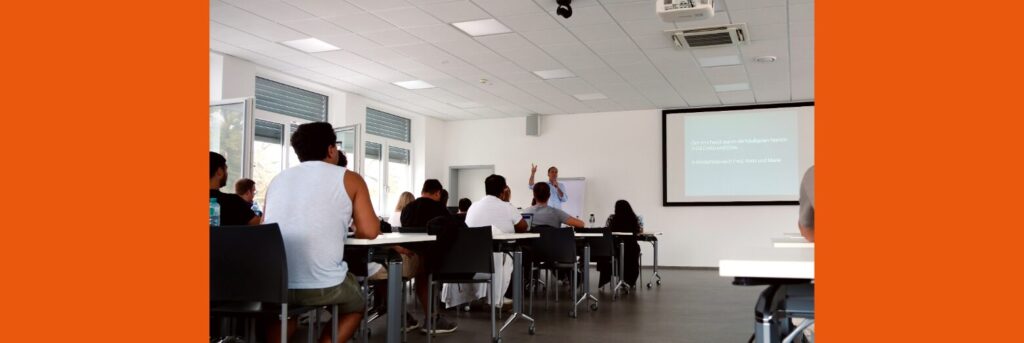
In addition, there are three in-person sessions per semester. These provide opportunities for in-depth study, discussion, exams, and the practical application of course material. This allows for an ideal combination of direct interaction with instructors and fellow students and the benefits of digital flexibility.
Start of the semester
2 days of in-person instructionIn person, in the form of a semester kickoff conference
Distance Learning Phase
Studying Anytime, Anywhereon the Online Campus
Midway through the semester
2 days of in-person instructionOnline (Exams)
Distance Learning Phase
Studying Anytime, Anywhereon the Online Campus
End of the semester
2 days of in-person instructionOnline (Exams)
Your Studies. Your Path.
Learn more about the FERNFH study model, explore your admission options, and find out how we can support you along the way.
Understanding Our Academic Model
Learn moreWhat sets our FERN program apart from conventional part-time degree programs and other distance learning options? Would you like to learn more about our FERNFH study model?
Use the FERNFH Infocenter
Continue to the Info CenterHere you'll find all the important information you need to pursue your dream degree, all in one place. From counseling and a self-assessment for distance learning to the application process.
Studying Without a High School Diploma
Learn moreWhere there's a will, there's a way. At least at FERNFH. Learn more about how you can earn a college degree without a high school diploma.




Do you have any more questions?
Have you checked out the program page and brochure to learn more about the program you’re interested in? And did you still have a few questions that came up or remained unanswered? Our FAQs can help you here. If you can’t find the answer to your question here, please feel free to contact our Student Advising Office directly.
To be admitted to a bachelor's degree program at FERNFH, you must meet one of the following requirements:
- General University Entrance Qualification / Vocational Maturity Exam / University Entrance Exam
- Relevant professional experience plus an additional exam (completed vocational training in an apprenticeship program or a three-year vocational high school program; for some of our bachelor’s degree programs, a three-year diploma program is also accepted) – a free online preparation course is available for the additional exams, and the exams themselves are free of charge.
You can find detailed information about the requirementshere.
We offer the largest bachelor's degree program in business informatics at a university of applied sciences in Austria and have a relatively large number of available spots. If you're truly committed to pursuing this degree, there's a very good chance we'll be able to make it happen for you.
As a general rule, even a spot on the waiting list during the admissions process means that, thanks to applicants who change their minds and withdraw, you’ll still receive a firm acceptance in time for the start of the academic year.
Yes, if you can provide proof of relevant professional qualifications and pass additional exams.
Here you'll find more details about studying without a Matura.
Unless otherwise specified, attendance is mandatory for all events (introductory lectures, exams, workshops) during in-person sessions. This also applies, mutatis mutandis, to online events held during an in-person session.
No, for us, “distance learning” means much more than just online lectures. We meet three times per semester for our in-person sessions in Wiener Neustadt (and, in some cases, for online in-person days).
During the semester, there may also be online meetings, but these are more like Q&A sessions than lectures. For the rest of the program—that is, during the so-called distance learning phases—you’ll study the material independently and on your own schedule. There will be reading assignments and tasks of varying lengths that will allow you (and your instructors) to determine whether you’ve understood everything.