Navigating Your Daily Digital Work Life with Confidence
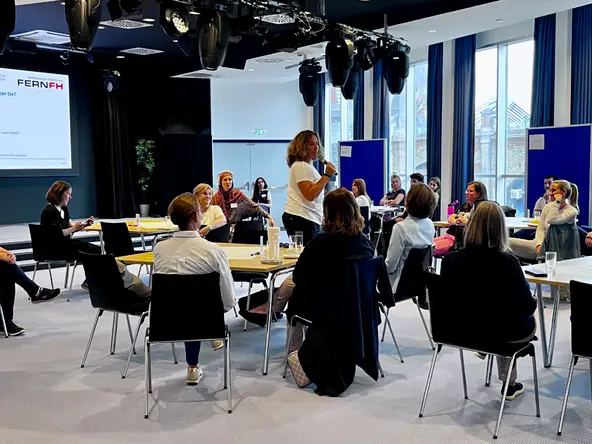
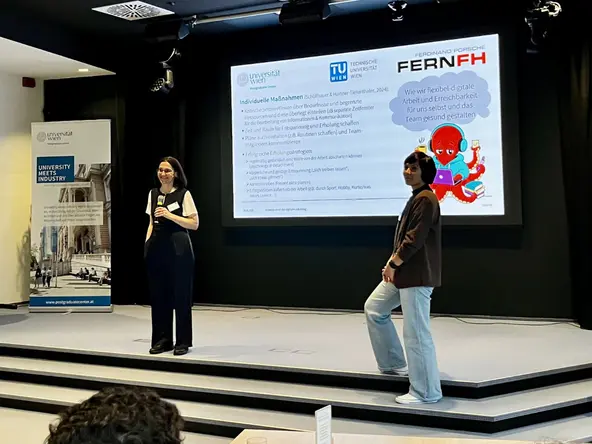
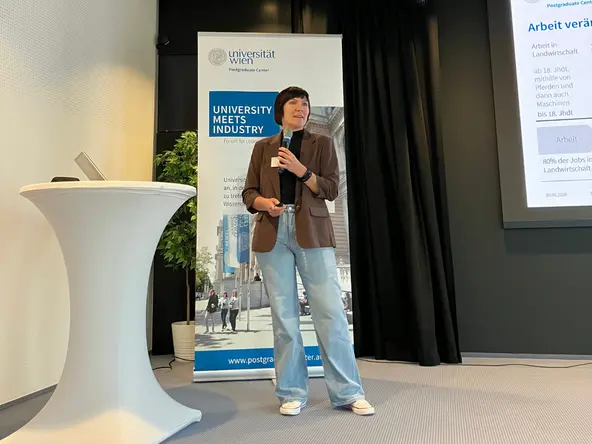
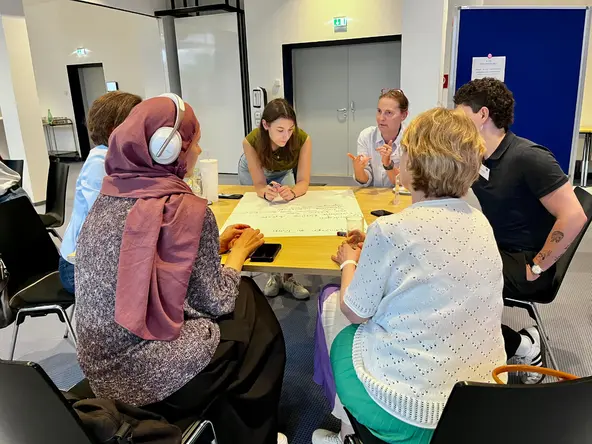
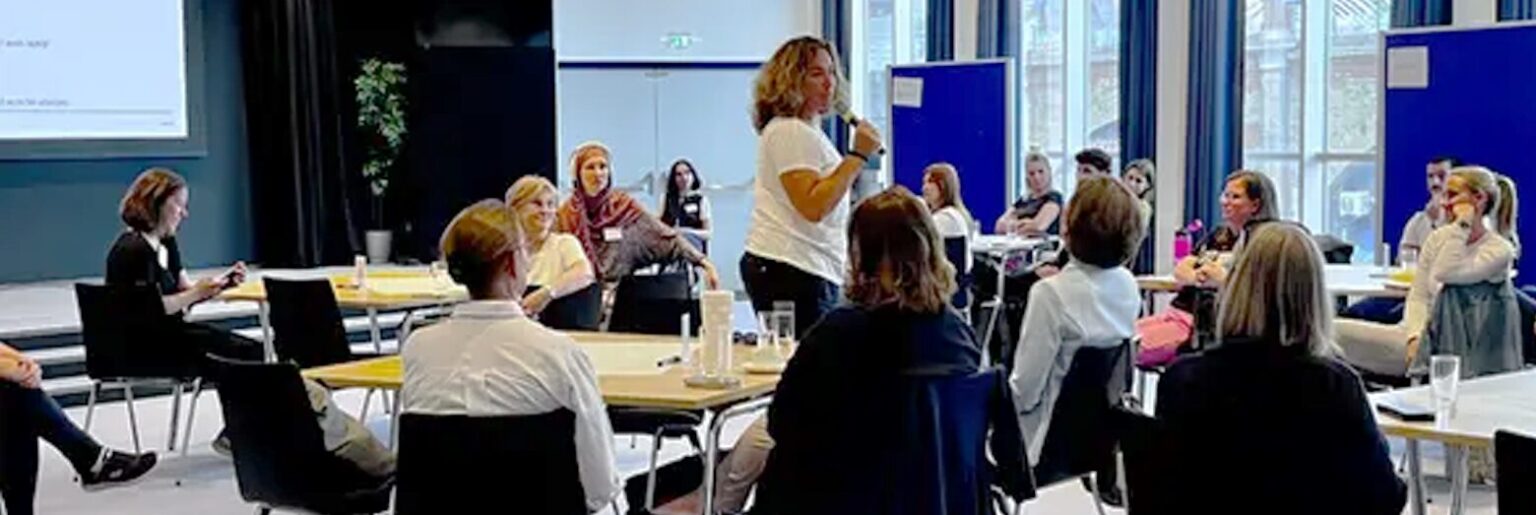
Julia Schöllbauer, program director and instructor at Ferdinand Porsche FERNFH, joined Martina Hartner-Tiefenthaler from TU Wien in a workshop to highlight the opportunities and challenges of flexible, digital work. About 25 participants discussed key challenges and potential solutions for the future of everyday work.
On June 9, 2026, the workshop “Navigating the Digital Workday with Confidence” took place as part of the uniMind event series organized by the Postgraduate Center at the University of Vienna in cooperation with Wiener Stadtwerke. The goal was to structure flexible, digital work in a way that maintains a balance between productivity, collaboration, and mental health. Dr.JuliaSchöllbauer, BSc, MSc, lecturer and program director for the Master’s in Business Administration & Business Psychology, provided the academic perspective and designed the workshop together with Priv.-Doz.Dr. MartinaHartner-Tiefenthaler from the Vienna University of Technology (TU Wien). The in-depth discussion during the World Café session yielded key practical insights.
Flexible Digital Work: Opportunities and Risks
Flexible work offers more freedom in terms of time, location, and collaboration, thereby boosting autonomy and motivation. At the same time, new stresses arise when clear structures are lacking or the boundaries between work and leisure become blurred.
A key factor is availability within the team. Flexible work is most effective when teams work together to determine when and how they will be available. A rigid separation of work and personal time does not always prove to be the best solution. What remains crucial is a transparent understanding within the team that allows for flexibility while protecting time for rest and recovery.
Similarly, the quality of communication in everyday digital work life shapes collaboration. A large number of channels can quickly lead to information overload. Teams work most effectively when they consciously design information flows, prioritize content, and deliberately schedule time for informal exchanges.
Trust within a team forms the foundation of effective digital collaboration. It influences how information is received and how well cooperation succeeds. At the same time, it is clear that social connections must be actively nurtured, for example through thoughtfully designed shared activities.
Setting Boundaries and Reflection as the Keys to Healthy Collaboration
In addition to these team factors, setting personal boundaries plays a central role. Without intentional breaks, the risk of burnout, interruptions, and constant availability increases. Routines, clear boundaries, and intentional rest are essential in flexible, hybrid work environments with heavy workloads.
Research findings also show that structured team reflection has a measurable effect. It reduces emotional exhaustion while simultaneously enhancing team performance. The workshop made it clear that flexible, digital work is not a sure thing. It requires deliberate planning at both the individual and team levels. Clear communication, coordinated availability, and targeted reflection enhance both well-being and collaboration, and form the cornerstones of sustainable work in digital work environments.