Your Inner Saboteur and How to Find More Ease (in Your Studies)
You want to get started—but you don’t. You want to move forward—but you hold yourself back. Many people are familiar with these situations. The Student Council and the Alumni Network at Ferdinand Porsche FERNFH hosted an online keynote talk that encouraged participants to look inward: Where does self-sabotage come from, and how can we learn to stop getting in our own way?
The speaker, Wolfgang Dallavia—a mentor who has been working as a holistic health practitioner in Austria for over 25 years—guided the participants at this event into the world of inner patterns and defense mechanisms.
Where Self-Sabotage Comes From and Why It Hinders Our Learning
Using a combination of bodywork, elements of psychology, and Chinese medicine, Dallavia explained how so-called internal patterns arise: as protective responses stemming from childhood or earlier experiences. These patterns are meant to shield us from pain, shame, or feeling overwhelmed, but they often limit us in adulthood.
The focus was on three types of individuals, known as “saboteurs”:
- The perfectionist —demands too much, constantly doubts, and often prevents oneself from even getting started.
- The Driver —operates through pressure, ignores boundaries, and keeps the system under constant stress.
- The Avoider —puts things off and shields oneself from unpleasant feelings, but sabotages progress.
These saboteurs are not adversaries, the speaker emphasized, because they want to protect us—but with strategies from the past. The key lies in recognizing the underlying emotions rather than fighting against these patterns, because only then can we understand their inner logic and open a path to change.
From Internal Conflict to Internal Cooperation—Insights from the Discussion
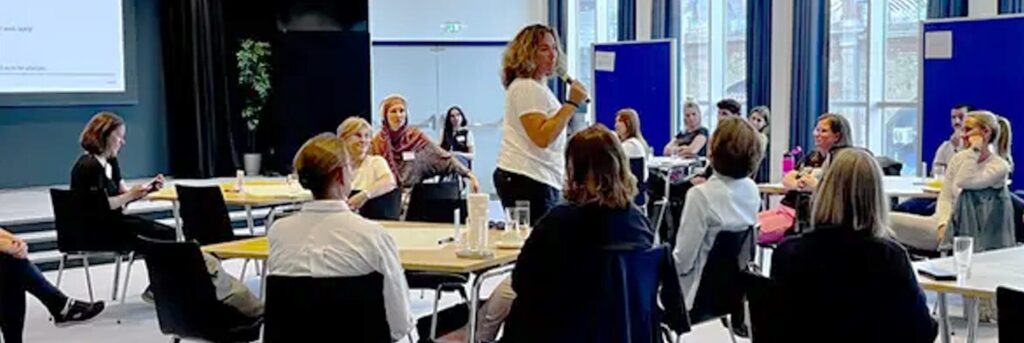
During the Q&A session that followed, the participants demonstrated just how relevant this topic is to everyday life: How can you turn an inner saboteur into an ally? How do you change patterns that have been in place since your school days? And how can you break free from feeling overwhelmed or on the verge of a breakdown?
The responses were, of course, very individual, but some key insights emerged nonetheless:
- Inner saboteurs often protect vulnerable, unseen, or shameful parts of ourselves.
- Change begins with self-awareness: pause, observe, write it down, reflect.
- The path does not lie in struggle, but in being kind to oneself.
- Self-care—in the sense of empathy, taking breaks, and mindful attention—is essential.
- Breakdowns can be turning points: When old walls of protection crumble, space for healing opens up.
- Every process of change requires patience
Did you miss the event?

Wolfgang Dallavia is a yoga teacher, mentor, and an expert in naturopathy. For over 20 years, he has been supporting people through periods of personal and professional transition—from breakups and burnout to finding a new direction. In his work, he combines Western and Eastern approaches to help people identify their inner saboteurs and transform them into clarity, motivation, and flow. Learn more about Wolfgang Dallavia: lebenimfluss.at

The FERNFH Student Council
The FERNFH Student Council actively advocates for the interests of all students—whether they’ve just started or are already in the home stretch. It organizes events, represents students’ concerns, and creates opportunities for exchange and networking. You can find out more about its work on the Student Council’s website.

FERNFH Alumni Network
The FERNFH Alumni Network offers graduates, students, and faculty a platform for lifelong learning, exchange, and mutual support. Through events, professional insights, and a strong community, connections with FERNFH remain strong—even long after graduation. In 2025, the network will celebrate its 10th anniversary. You can find more information on the Alumni Network’s website.