When Climate Protection Becomes Tangible: CoClimA at the 2026 Long Night of Research
Table of Contents:
“Aha” moments, engaging conversations, and surprising perspectives: FERNFH staff members will demonstrate at the 2026 Long Night of Research at the Kirchliche Pädagogische Hochschule (KPH) in St. Pölten, how climate protection can be experienced in everyday life, why we can make a bigger impact together, and how citizen science can help promote climate protection.
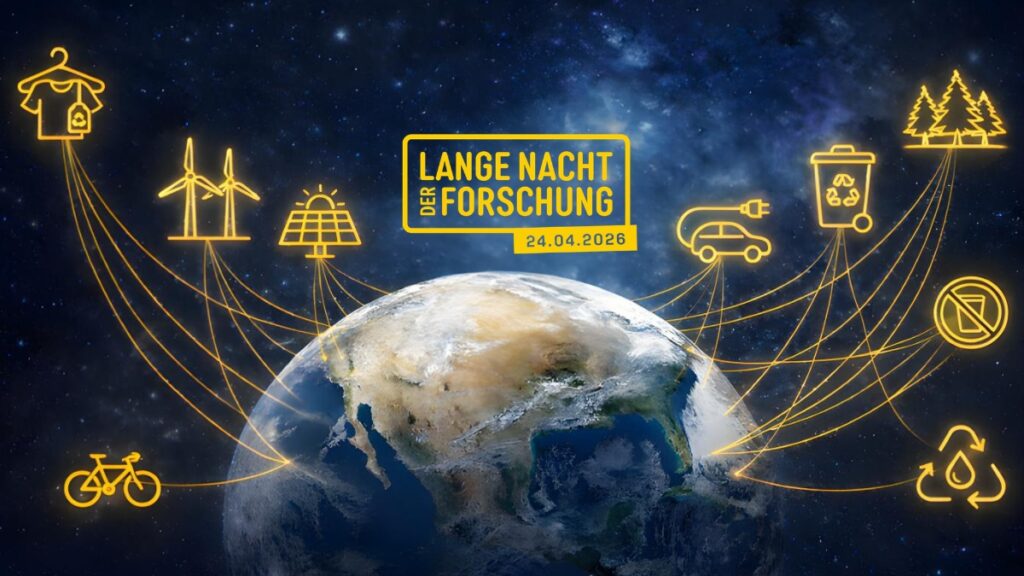
At the KPH Campus St. Pölten in Lower Austria, the CoClimA project team was right in the thick of things on April 24, 2026, when the Long Night of Research once again brought science to life across Austria. More than 192,000 visitors nationwide took advantage of the opportunity to spend an evening discovering research in all its facets—with free admission. The event was successfully held for the twelfth time—a strong indication of the great interest in science and innovation in Austria.
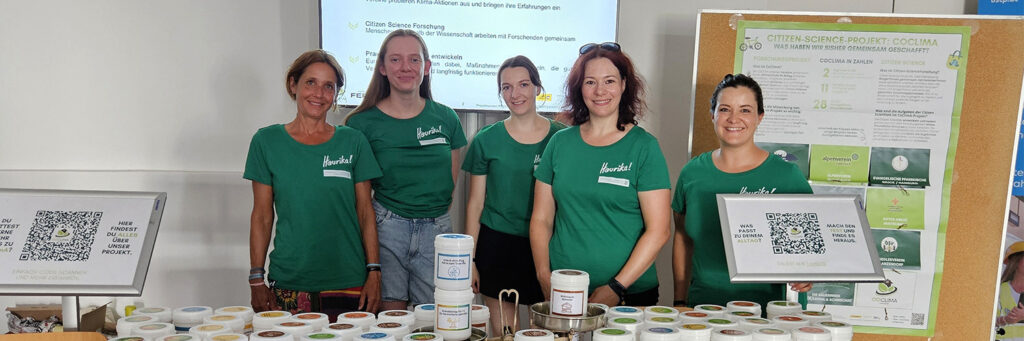
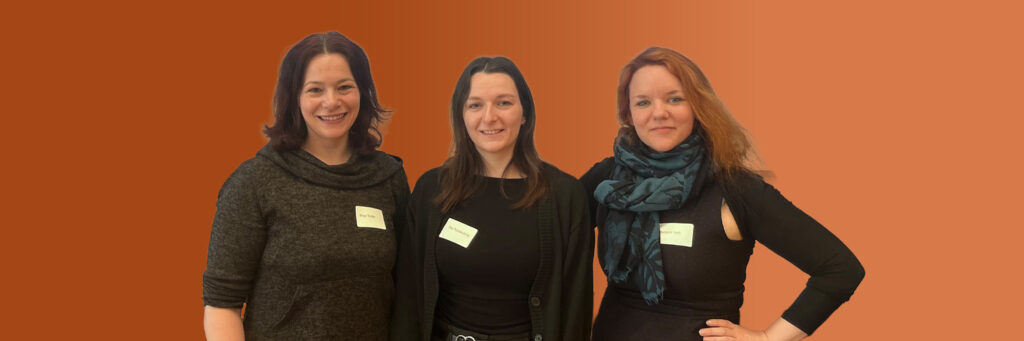
There was plenty going on at the KPH as well: About 200 interested visitors learned about the diverse projects taking place there. A project team from the Ferdinand Porsche FERNFH was also represented with a booth. Visitors spoke with project leader Birgit Teufer and project staff member Katharina Glöckel about the citizen science research project “CoClimA,” exchanged views on climate change, and discussed concrete ways to adopt climate-friendly behaviors in everyday life.
The Climate Scale as a Crowd-Pull
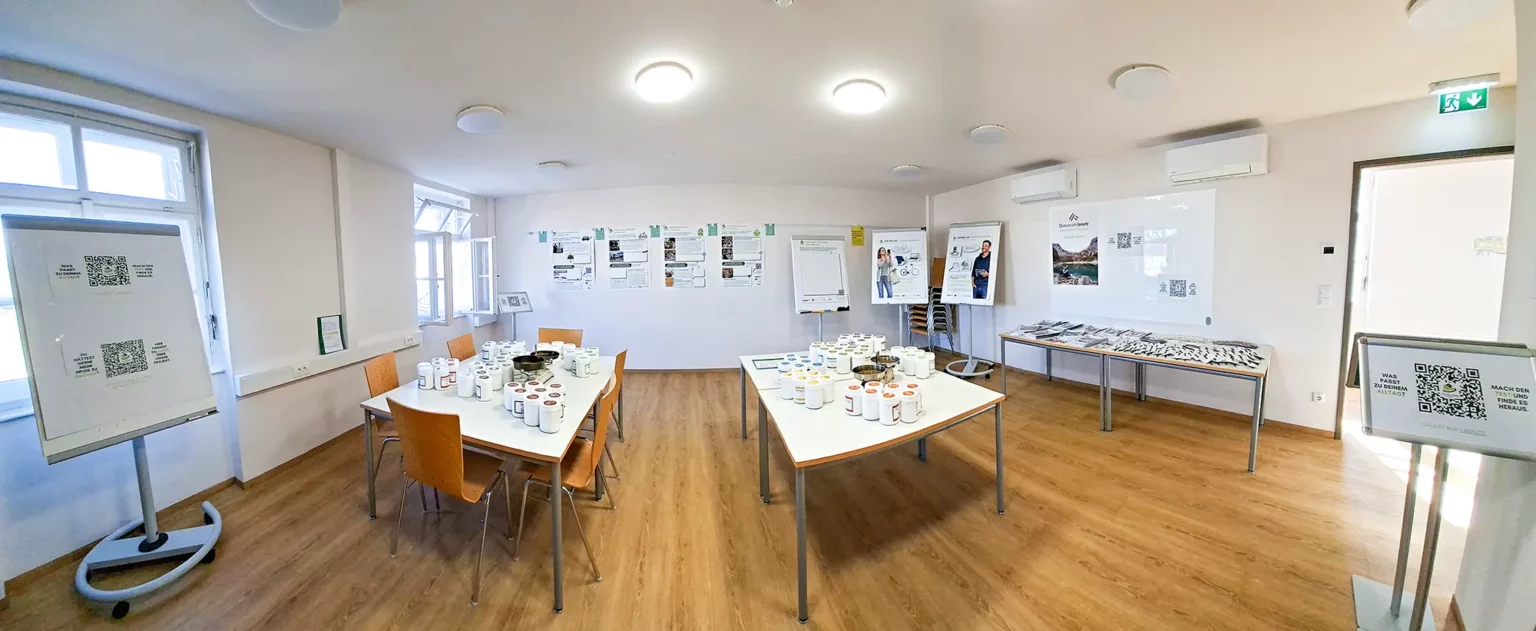
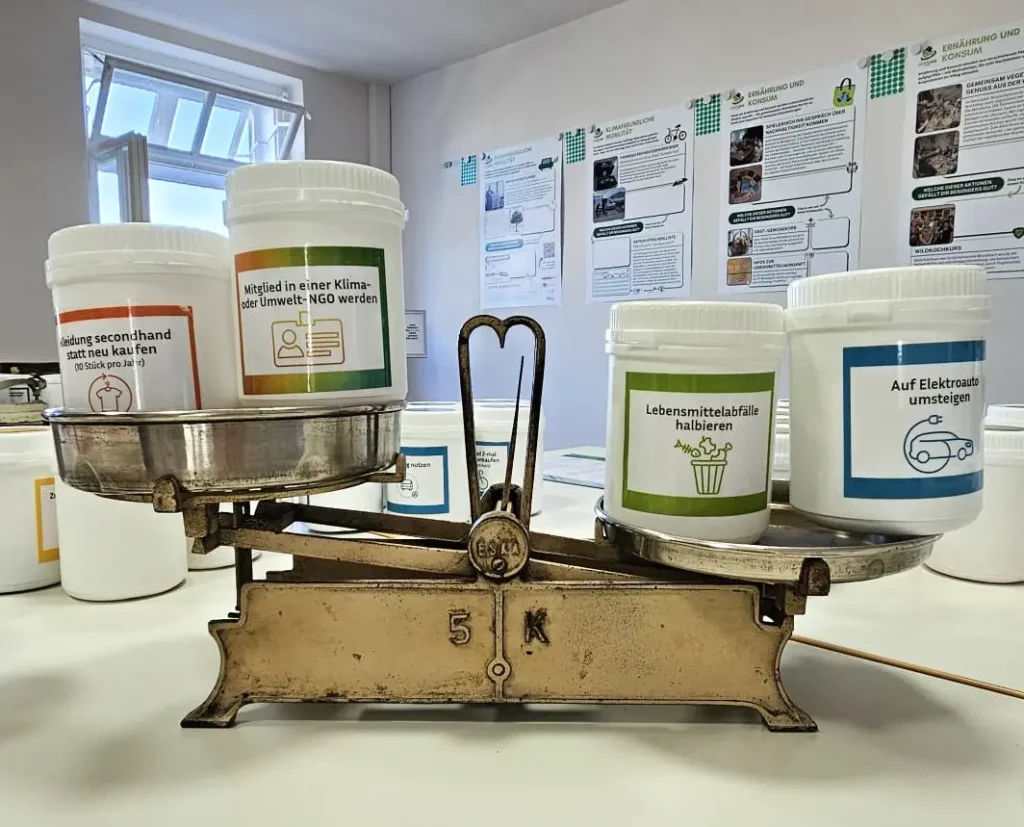
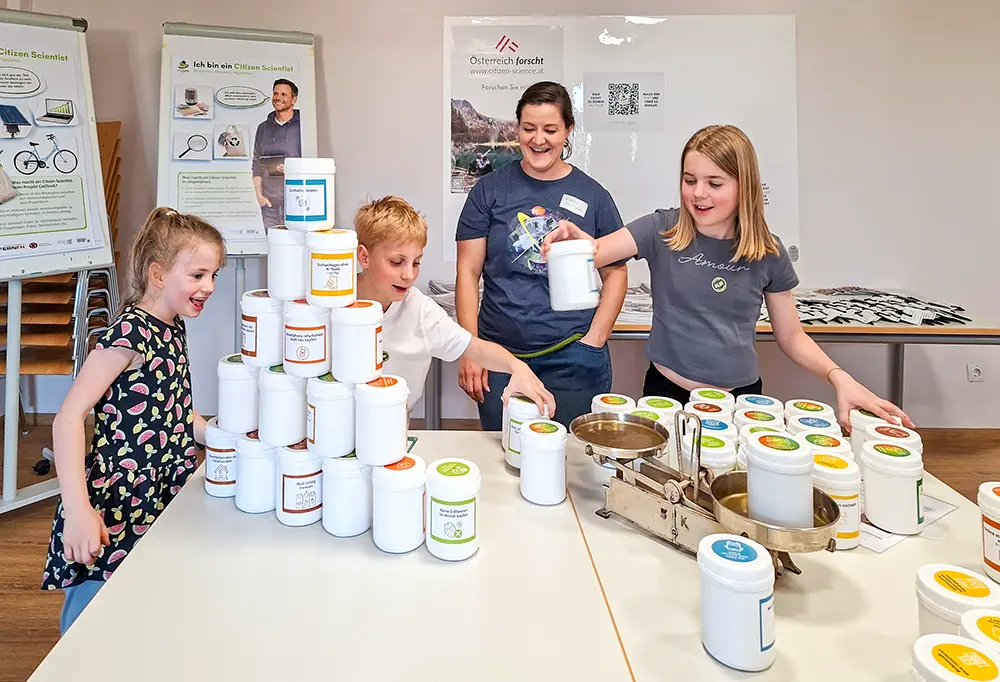
The clear highlight of the station: the homemade climate scales, inspired by the Center of Excellence for Sustainable Consumption. The sand-filled cans made CO₂ savings visible and, above all, tangible. This vivid example of climate protection in everyday life made abstract numbers tangible.
This made it possible to compare a wide variety of everyday decisions and actions—and to “experience” them in the truest sense of the word. For example, what does it mean for one’s carbon footprint to skip a flight once a year, compared to taking public transportation to work every day? Or what difference does it make to one’s personal carbon footprint if people cut back on meat, sausage, or other animal products more often? The Climate Scale provided immediate, hands-on answers to these questions, and that’s exactly what sparked conversations, “aha” moments, and often a surprised reaction: “I wouldn’t have thought so.”
CoClimA: More Than Just Individual Decisions
The Climate Scale served as an introduction to the CoClimA citizen science project and addressed a central question: How do climate-friendly social norms emerge, and how can they be changed within the community to promote sustainable climate protection?
The project shows that climate protection is not solely an individual responsibility. Communities amplify the impact. Clubs and organizations shape behavior. And social norms have a significant influence on the decisions we make—and those we don’t. The contribution of individuals is important. But it is only through the collective action of many that change at the systemic level can occur.
CoClimA takes up precisely this idea and brings it to life in a practical way: People are not only informed, but are actively involved in the research process as citizen scientists.
Hands-On Citizen Science
At CoClimA, citizen science means more than just participating: Citizens become an active part of research, help shape initiatives, and share them with their communities. They contribute their perspectives, experiences, and ideas, thereby making research relevant to everyday life and effective. This was clearly evident during the Long Night of Research.
In addition to the climate scale, visitors could:
- Learn what citizen scientists actually do
- Discover initiatives from participating clubs and organizations
- vote for their favorites
- contribute your own climate-friendly ideas
Practical Interventions
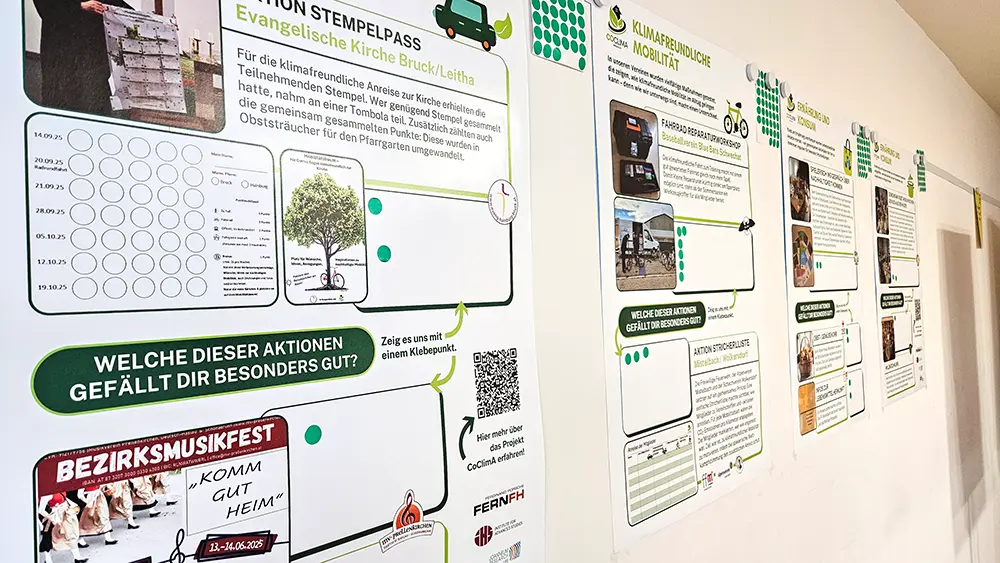
The FERNFH station placed a special focus on the specific measures and initiatives that were developed as part of the project in collaboration with associations and organizations and are already being tested in everyday life. They demonstrate the wide variety of ways climate-friendly behavior can take shape and how it can be integrated into existing structures.
These include, among others:
- Group cooking classes and tips on nutrition
- Climate Game Nights
- Simple Ways to Track Mobility in Everyday Club Life (Checklist)
- Creative incentives for climate-friendly travel (stamp passport)
- Sewing Classes
- and much more …
Visitors were able not only to learn about these approaches, but also to evaluate them and contribute their own ideas. This demonstrated once again just how much innovative potential lies within communities.
Focusing on Your Own Daily Life: The CoClimA Online Test
In addition to the Climate Scale and the interactive activities, visitors were able to take an online climate quiz right there on site. In less than a minute, the quiz helps people identify areas of their daily lives—such as transportation, diet, or consumption—where there is still potential for making more climate-friendly choices.
The test offers a simple, accessible starting point and highlights where even small changes can make a difference.
Starting a Conversation—Even When Opinions Differ
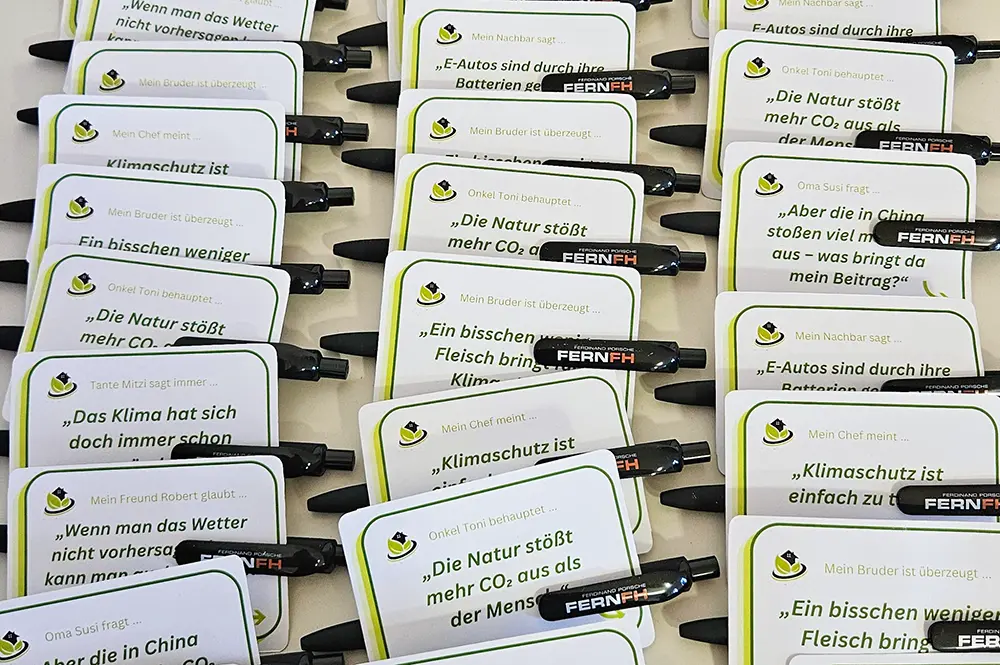
Another feature of the station was the CoClimA conversation cards: small prompts designed to help start conversations about climate protection, even with people who are skeptical of the issue.
Based on common statements such as “The climate has always changed” or “Climate protection is too expensive,” the cards address frequently heard arguments and pair them with brief facts and open-ended discussion questions. This fosters not a back-and-forth exchange, but a dialogue among equals.
Participants enjoyed flipping through the cards, discussing them, and found them to be a helpful tool—precisely because they provide confidence in handling challenging conversations. The conversation cards are also available for download as a PDF and are welcome to be brought along to your next conversation.
Encounters That Last
The many different encounters were particularly memorable, and the takeaway was this: enthusiasm knows no age.
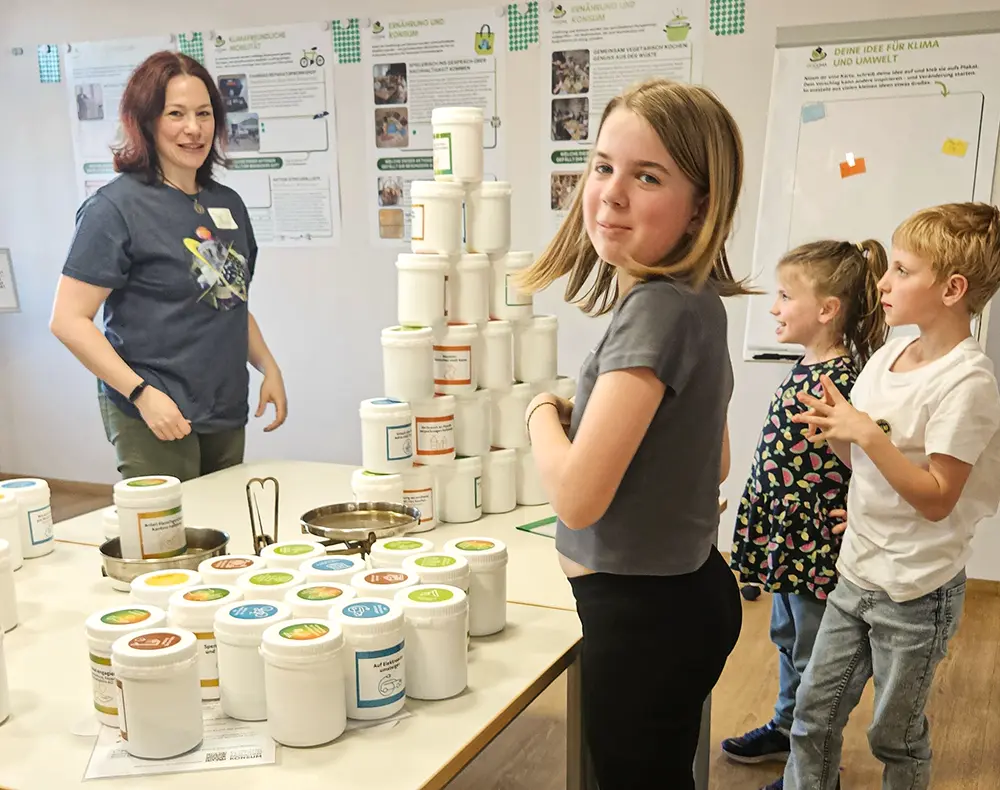
Many children participated with great enthusiasm and came up with their own unique ideas: Without further ado, they stacked the Climate Scale cans into little “climate pyramids.” With great eagerness, they experimented, compared, and marveled; they deciphered terms and discovered connections. It is precisely this curiosity that is so valuable, because this is exactly where long-term change begins.
At the same time, we also had some fascinating conversations with older visitors. Many of them talked about how it used to be second nature to repair things instead of buying something new, and how consumer habits have changed over time.
There were many curious questions, honest reflection, new perspectives, and plenty of small insights. The CoClimA team is taking many impressions and ideas with them into their future work and, above all, felt validated in their approach: involving people. Shaping the future together. Making an impact. Once again, it became clear how important low-threshold access points are and how much potential there is in meeting people exactly where they are.

The CoClimA research project —a climate alliance of communities organized by FERNFH—examines how community engagement influences climate-friendly behavior in regions.
Do you have any questions for the project team? Feel free to contact us at coclima@fernfh.ac.at
You can find more details on the project page: https://www.fernfh.ac.at/coclima