Effective Teamwork in a Hybrid Environment
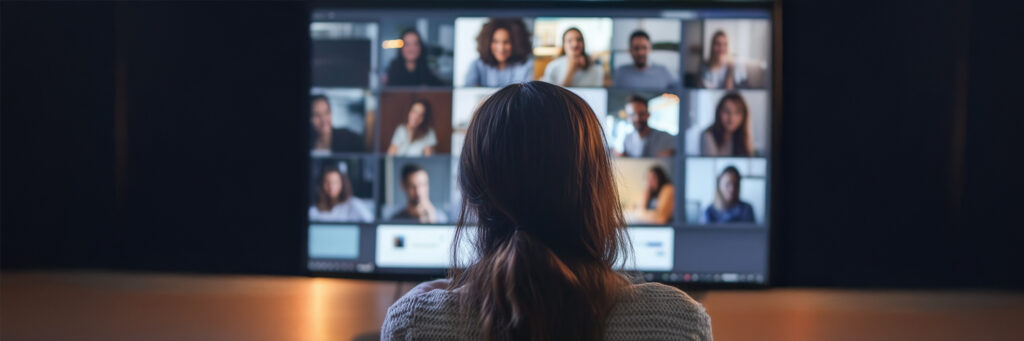
Hybrid work is here to stay—and it presents teams with new challenges. How can we ensure that collaboration works even when part of the team is on-site, in the office, or working remotely? During a keynote presentation on November 11, 2025, Priv.-Doz.in Dr. Martina Hartner-Tiefenthaler and Mag. Patryk Senwicki, MSc, shared practical insights into the success factors of hybrid teamwork and introduced the assessment tool teamorama.
The advantages and disadvantages of hybrid work are now well documented in various studies. However, to truly realize the potential of remote work, we need to focus more on the team context. In hybrid teams, team members work partly on-site and partly virtually. These teams face unique challenges: communication and interaction routines must be redesigned and adapted to the hybrid context.
To support this effort, the teamorama project was launched. The goal was to develop a tool that helps teams better understand their processes and encourages collaborative reflection.
Three Key Factors for Successful Hybrid Collaboration
At the start of her keynote presentation as part of the Alumni Network’s event “Effectively Shaping Teamwork in a Hybrid Context,” Priv.-Doz.in Dr.in Martina Hartner-Tiefenthaler explained the scientific basis that led to the development of teamorama. At the heart of the assessment tool are three key factors that are crucial for effective hybrid collaboration: communication, accessibility, and team spirit. These form the foundation for ensuring trust, transparency, and efficiency even across geographical boundaries.
Following the theoretical overview, Mag. Patryk Senwicki, MSc, provided a practical insight into how the tool works and how to use it. Teamorama is a free, web-based assessment tool grounded in the latest research findings in team and organizational psychology. It helps teams reflect on their collaboration and develop it in a targeted manner. After completing an online questionnaire, teams receive a personalized results report, known as “teamorama insights.” These include an easy-to-understand analysis, comparative data from other teams (benchmarks), and tailored recommendations for making targeted improvements in the three key areas.
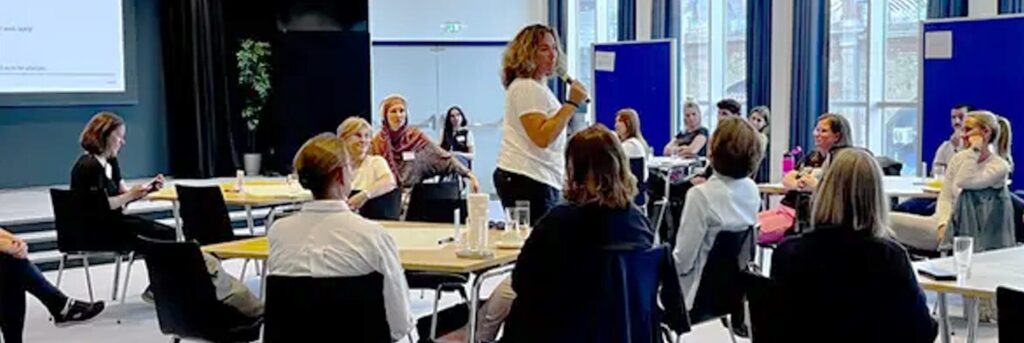
At the end of the event, participants took the opportunity to ask their own questions. The topics ranged from fundamental questions such as “Where does this mistrust of hybrid work come from in the first place?” to questions about the practical application of the tool, and discussions about the scientific details of the study.
The event was moderated by Vivien Marx, a research assistant at the Institute for Economics & Psychology and a member of the alumni team at FERNFH.
Missed the presentation?
If you'd like to learn more about teamorama and the research behind it, you can watch the presentation here.
Additional Information
You can find more details about teamorama in the information brochure.
Those interested can also sign up for the teamorama newsletter. Among all those who sign up for the newsletter by November 19, 2025, Priv.-Doz.inDr . Martina Hartner-Tiefenthaler and Mag. Patryk Senwicki, MSc, will raffle off a half-day team workshop that uses teamorama to guide participants through collaborative reflection, thereby helping to improve teamwork in the long term.*
*The contest is organized by the speakers and was not initiated by FERNFH. Therefore, please direct any questions directly to the contest organizers. Thank you, and good luck to everyone who enters.
The Speakers

Priv.-Doz.inDr.inMartina Hartner-Tiefenthaleris a senior scientist at the Vienna University of Technology (Institute of Management Sciences) and works at the intersection of technology, organization, and people. Her background combines solid business expertise with a deep understanding of psychology, which she enjoys bringing to companies through her research projects in order to live up to her motto: “Research should make a difference.”

Mag. Patryk Senwicki, MSc, isa Ph.D. student at the Institute of Management Sciences at TU Wien and focuses on team development and interventions in the context of hybrid work.
The Organization
The FERNFH Alumni Network offers former and current students, as well as faculty and staff at FERNFH, a platform for lifelong learning, professional development, and mutual support. Through exciting events, networking meetings, and the latest professional insights, the network creates targeted added value for everyone. You can find more information on theAlumni Network’s website.