FERNFH I-DEE 2026: Assessment & Teaching in the Age of AI
Artificial intelligence is fundamentally transforming higher education. At FERNFH’s Innovation Day on February 18, 2026, the focus was therefore on how assessment and teaching can be structured in the age of AI—balancing new technological possibilities, didactic and academic responsibilities, and the need for fair performance evaluation.
Downloads for Media Representatives:
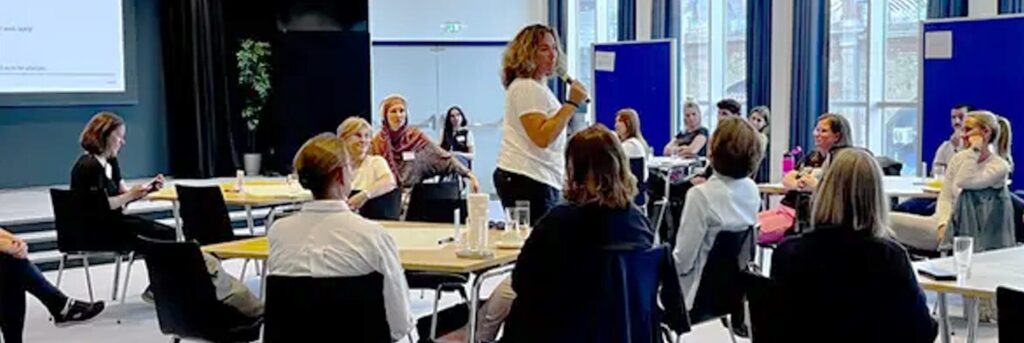
Wiener Neustadt – FERNFH’s Innovation Day (I-DEE for short) is FERNFH’s annual hybrid conference dedicated to the further development of teaching, pedagogy, and innovation. Using the “20 minutes of input, 20 minutes of discussion” format, an intensive exchange took place between faculty and staff from various disciplines and academic programs.
Exams in the Age of AI: What Still Counts as “One’s Own Work”?
Generative AI is challenging traditional teaching and testing formats. The discussion focused on how performance assessment might be structured in the future and what skills students should develop in working with AI. The managing director of Ferdinand Porsche FERNFH, Mag. (FH) Axel Jungwirth, MEng, AKKM, emphasizes: “As a university, we bear responsibility for the quality and sustainability of our teaching. For us, the use of artificial intelligence is not only a challenge but also a strategic opportunity to further develop course content, exam formats, and learning processes.”
From Self-Experiments to Responsibility: Key Topics of the Day
The presentations ranged from practical experiences and technical perspectives to ethical and pedagogical issues. They demonstrated how competencies can be made visible and how AI can be responsibly integrated into courses. The deputyhead of the faculty, Prof. (FH) MMag.a TanjaAdamcik, emphasizes: “Engaging with AI encourages us to consciously reflect on teaching, further develop it, and also try out new approaches. The focus is not solely on exam formats, but on fostering core competencies such as critical thinking, applied skills, and reflective learning—skills that students need both for professional practice and for a responsible and competent use of AI.” An important consensus emerged throughout all the discussions: AI can generate content, but enthusiasm, attitude, and reflection remain central human tasks in teaching.
Exchange & Discussion Instead of Ready-Made Answers
The I-DEE was organized by Eszter Geresics-Földi, MSc, BSc; Mag.a Nina Miklavc; and Mag.a Dr.in Ada Sil Patterer, BA, research assistants and faculty members at FERNFH. The goal was to create a structured framework for interdisciplinary discussions on the further development of teaching and assessment formats in the context of AI. The organizing team emphasizes the interdisciplinary value of the event: “The I-DEE offers us, as instructors, a space for open exchange and critical inquiry, where different academic departments can learn from one another. As organizers, we see it as our task to build bridges between theory and practice and to discuss new approaches to exams and teaching in the AI era. This allows us, as educators, to continuously develop our skills.”
Conclusion: AI is transforming teaching—but education remains human
The I-DEE 2026 made it clear: Universities are not faced with the task of preventing AI, but rather of integrating it responsibly into teaching and exams. However, there will be no one-size-fits-all solutions. Future-proof teaching emerges where technological possibilities are combined with high-quality pedagogy, transparent performance assessment, and a clear focus on competencies.